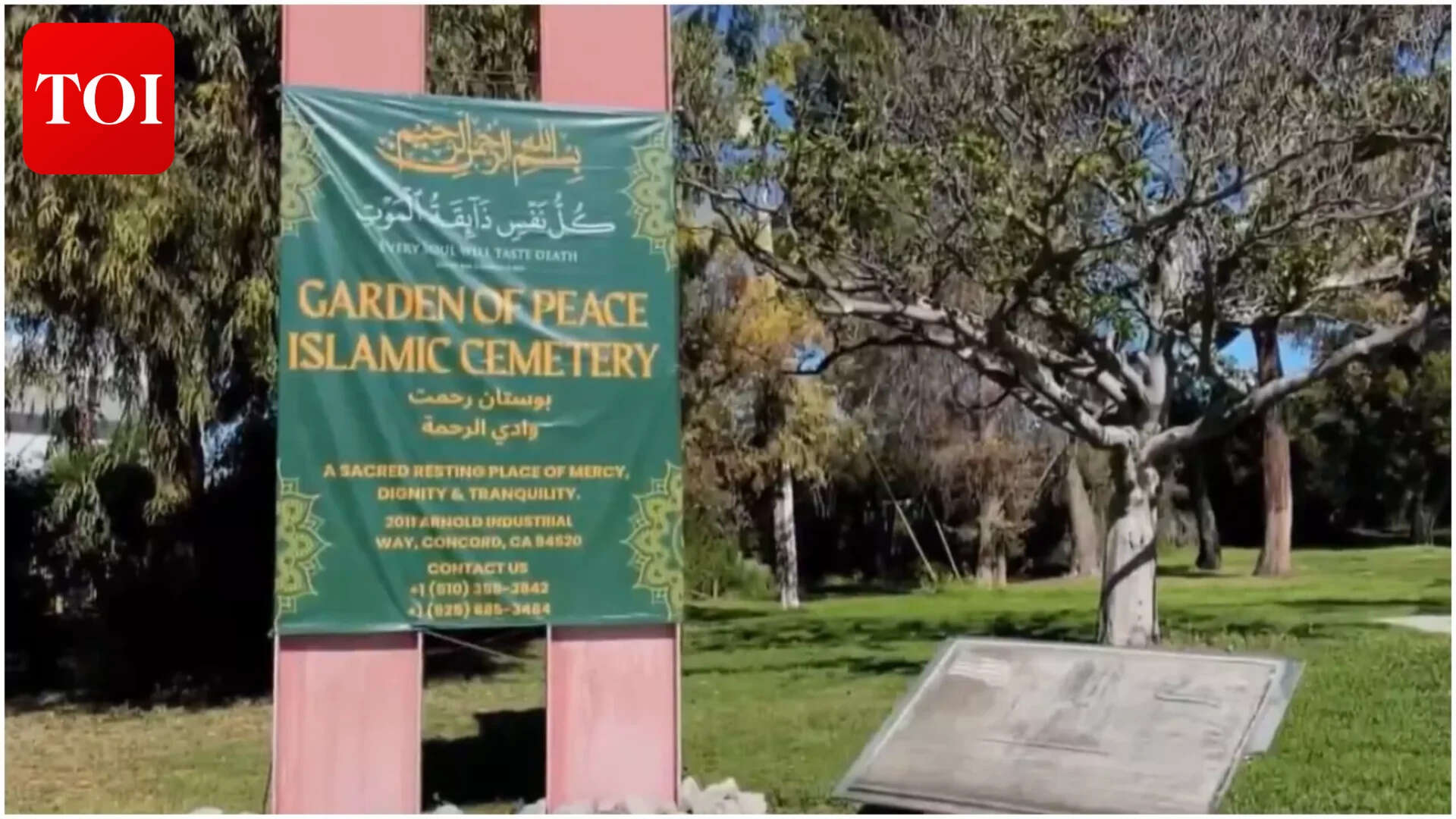
The physical removal of a banner from a 9/11 memorial site is never just about a piece of fabric. When a cemetery administration recently stripped away the sign designating a specific Islamic section near a 9/11 commemorative area, they didn't just remove a marker; they triggered a deep-seated conflict over how America audits its grief. The families affected describe it as a calculated act of disrespect. The administration calls it a matter of uniform code and "aesthetic neutrality." But a closer look at the paper trail and the timing suggests that this is less about cemetery bylaws and more about a shifting political climate that is increasingly uncomfortable with the visible intersection of Islam and American national tragedy.
At its core, the issue centers on the Washington Memorial Park, where a banner identifying a section for Muslim families—many of whom lost loved ones on September 11, 2001—was summarily taken down without prior consultation. The families were met with an empty fence and a wall of silence. The official explanation cited "consistency in signage" and "long-standing regulations" regarding non-permanent fixtures. However, the selective enforcement of these rules tells a different story. In an industry where "perpetual care" is the product, the sudden sanitization of a specific religious identity feels less like maintenance and more like erasure.
The Architecture of Erasure
Cemetery management is usually a quiet, invisible business. It relies on the assumption that once a plot is sold, the emotional and spiritual requirements of the family will be honored in perpetuity. But as land-use policies evolve, the "neutrality" of public and semi-private spaces is being weaponized. By removing the Islamic section sign, the administration effectively folded a distinct community space back into a generalized, anonymous landscape.
This isn't an isolated incident of bad PR. It is a symptom of a broader trend where memorial sites are being "curated" to avoid perceived controversy. For the families of 9/11 victims who are also Muslim, their identity is a double-edged sword in the public eye. They are mourners, yet they are often treated as intruders in the very narrative of national loss they helped write with their own blood. The removal of the banner serves as a physical manifestation of this marginalization. If you take away the name, you take away the specific history of that group's contribution to the collective mourning process.
The legal reality is that private cemeteries have broad discretion over their grounds. Most contracts signed by grieving families include fine print that allows the board of directors to change "beautification standards" at any time. This gives them a legal shield to dismantle specific cultural or religious markers under the guise of "maintaining a unified look." It is a bureaucratic loophole that allows for the slow-motion purging of diversity from the quietest corners of our society.
Follow the Paper Trail of Administrative Silence
To understand how a banner disappears, you have to look at the board meetings. In many of these corporate-owned memorial parks, decisions are driven by high-level "branding" strategies. Large-scale cemetery operators are increasingly focused on making their grounds "inclusive," which, in corporate-speak, often means "devoid of specific character." They want a product that is easy to sell to anyone, regardless of faith. A sign that explicitly calls out an Islamic section is seen by some consultants as a "barrier to entry" for other demographics.
When we look at the specific timeline at Washington Memorial, the sign had been up for years. Why now? The "why" usually points to a single complaint or a new regional manager looking to "clean up" the site. It only takes one anonymous phone call from a disgruntled visitor to trigger a "policy review." In many cases, the administration finds it easier to remove the "offending" object than to defend the rights of the minority group to display it. This is the veto of the heckler applied to the hallowed ground of a graveyard.
Families reported that when they questioned the removal, they were given the runaround. They were told the sign was "weathered" or that it "didn't meet the new specifications." Yet, other signs in the park, some equally weathered and many far more intrusive, remained untouched. This selective enforcement is the smoking gun. It proves that the "rules" are not the driver of the action, but the excuse for it.
The Myth of Neutrality in Mourning
There is a growing, sterilized version of American history that seeks to remove the "messiness" of religious and ethnic distinctions from our national monuments. Proponents argue that we should all just be "Americans" in death. But this ignores the reality that for the Muslim families at this memorial, their faith is central to how they process the trauma of 9/11. They were targeted by the terrorists, and then they were targeted by the subsequent backlash. The Islamic section sign was a small, vital acknowledgement that they belong in the story of American resilience.
By stripping the sign, the cemetery is enforcing a "white-wall" aesthetic that is fundamentally at odds with the pluralism of the United States. It is a form of cultural gentrification. Just as developers strip the character out of a neighborhood to make it more palatable to investors, cemetery boards strip the character out of memorial parks to make them more "marketable."
- Financial pressure: Corporate owners prioritize low-maintenance landscapes.
- Political pressure: Fear of "backlash" from fringe groups leads to preemptive removal of religious markers.
- Legal insulation: Contracts are designed to give families zero recourse once the check clears.
The Human Cost of "Policy Consistency"
Walk through any major cemetery and you will see the tension between individual grief and corporate order. You will see plastic flowers shoved into trash cans and hand-written notes removed by groundskeepers. But the removal of an entire section's identity is an escalation. It sends a message to the families: Your grief is a liability.
One mother, who lost her son in the North Tower, spoke of how that sign was her North Star when visiting the vast grounds. Without it, the space feels colder, more hostile. It isn't just about finding the grave; it’s about the validation of the community's presence. When a private corporation decides that a religious identity is "too much" for the public to handle, they are overstepping their role as stewards of the dead. They are acting as censors.
The response from the cemetery has been a masterclass in corporate deflection. They issued a statement that "values all families" while simultaneously refusing to put the sign back up. This is the "thoughts and prayers" of the death-care industry. It is a hollow gesture designed to wait out the news cycle until the families get tired of fighting.
The Precedent of Selective Memory
History shows us that whenever we try to "clean up" our memorials, we lose the truth. In the decades following the Civil War, many cemeteries removed specific markers to create a sense of "national unity," often at the expense of the truth about why the war was fought. We are seeing a modern version of this. By removing the Islamic section sign near a 9/11 memorial, the cemetery is participating in a revisionist history where the specific pain of Muslim-Americans is erased to make the site "easier" for everyone else to digest.
This is not a "clash of civilizations." It is a clash of values between a community that remembers and a corporation that wants to manage. The "neutrality" they claim to uphold is a fiction. Every choice a cemetery makes—from the height of the grass to the font on the gates—is a statement of value. By choosing to remove that banner, they have made a statement that the Islamic identity of these 9/11 families is not a value they wish to protect.
Reclaiming the Narrative of the Memorial
The families are not just asking for a sign. They are asking for an admission of the specific place they hold in the American story. They are demanding that their grief not be "managed" into invisibility. The solution isn't just to put the banner back; it's to change the way these "perpetual care" contracts are written so that boards cannot unilaterally strip away the cultural dignity of a section.
We need a "Mourner’s Bill of Rights" that prevents the corporate sanitization of our cemeteries. Until the families have real legal leverage, they will continue to be at the mercy of managers who prioritize "consistency" over community. The banner might be gone, but the families are still there. They aren't going anywhere, and their refusal to be erased is the most potent memorial of all.
Demand a public meeting with the cemetery board. Force them to define, on the record, exactly what "aesthetic standards" were violated and why those standards are only being applied to one section of the park. If the sign was "too temporary," offer to fund a permanent stone monument. If they refuse a permanent marker, you have your answer: it was never about the sign. It was always about the people the sign represented.
The next step is for the local community to stop viewing this as a "Muslim issue" and start viewing it as a "property rights and religious freedom issue." If they can take down one sign today because it's "not consistent," they can take down your family's traditions tomorrow. The bureaucracy of the cemetery depends on your silence to maintain its "order." Break that silence.