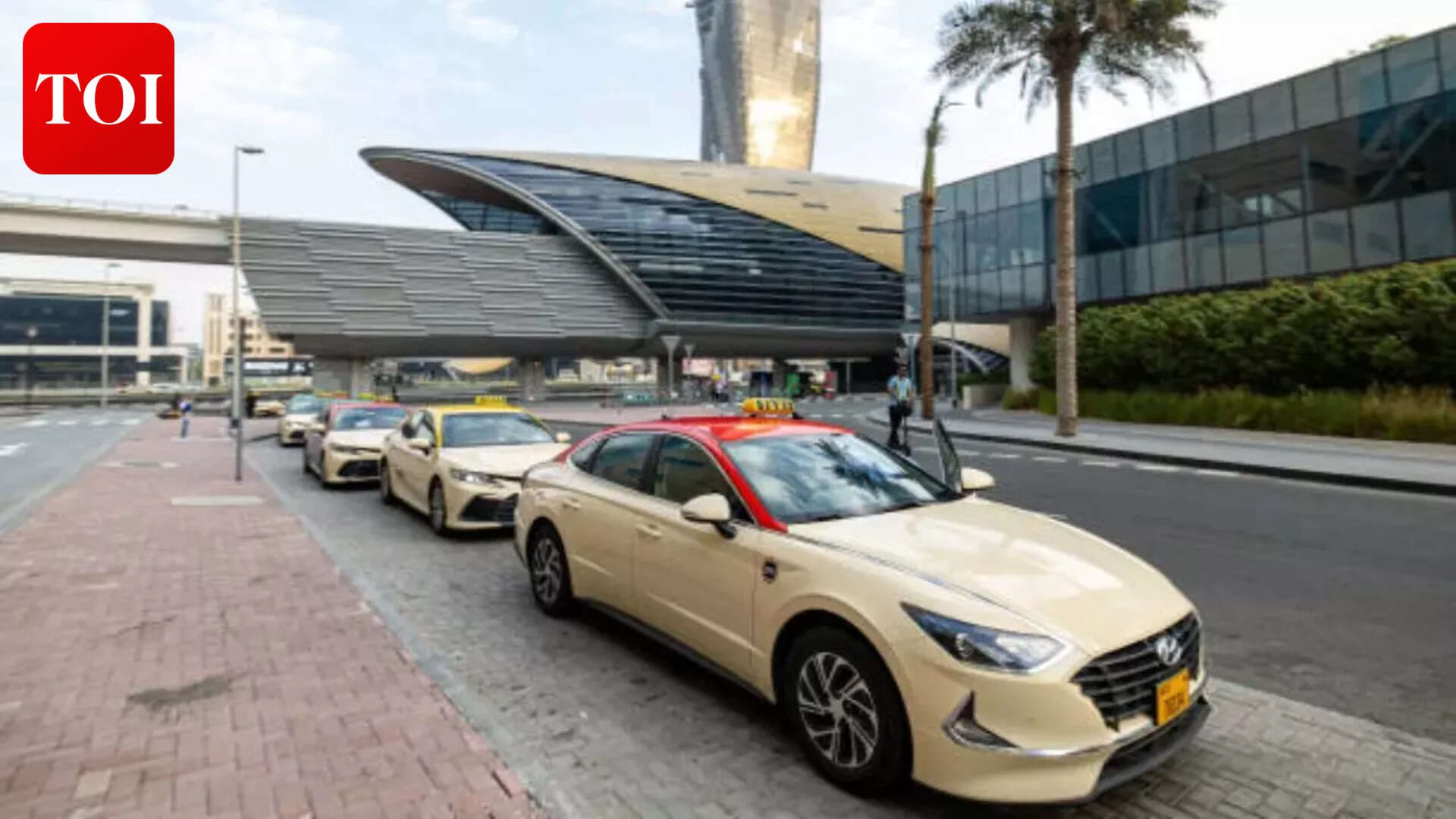
The metallic click of a seatbelt buckle is the unofficial start of the holiday. In Dubai, that sound usually competes with the rhythmic, relentless ticking of a parking meter. We are a city defined by motion, a desert metropolis that rose from the sands on the back of the internal combustion engine and the shimmering promise of the open road. But for three days during Eid Al Fitr, the rhythm changes. The ticking stops.
Dubai has announced that public parking will be free across the city to celebrate the end of the holy month. It is a small logistical adjustment on paper, yet for the people who navigate these glass-and-steel canyons, it feels like a sudden, cooling breeze in the height of July.
Consider a man named Omar. This is a hypothetical scenario, but if you have ever circled a block in Al Karama on a Tuesday night, you know Omar intimately. He is a father of three, a veteran of the E11 commute, and a man who has memorized the exact location of every RTA parking machine within a five-kilometer radius of his apartment. Usually, his life is a series of timed intervals. He pays for two hours. He sets a timer on his phone. He cuts a dinner short because the "parking expires in five minutes" notification just buzzed against his thigh.
During Eid, Omar’s world expands. From Tuesday, the 29th of Ramadan, until the 3rd of Shawwal, the city removes the invisible shackles of the parking fee.
The Cost of a Moment
We rarely talk about the psychological weight of the "paid zone." It is a constant, low-level static in the back of the mind. When the RTA clears the slate for those three days, they aren't just saving you a few dirhams. They are giving you back the luxury of lingering. You can stay for that second cup of gahwa. You can wait for the sunset at Umm Suqeim beach without glancing at your watch. You can actually listen to the end of a conversation.
This year, the grace period is expansive. It covers all public parking areas except for the multi-storey terminals. This means the side streets of Deira, the sprawling lots of Jumeirah, and the bustling hubs of Business Bay are suddenly open territory. It is an invitation to explore the parts of the city we usually avoid because the logistics are too daunting.
But the roads are only half the story. While the cars find their temporary homes for free, the city's pulse—the Metro and the Tram—shifts into a higher gear. This is where the engineering of a holiday becomes a masterpiece of timing.
The Midnight Train to Everywhere
If the free parking is a gift of space, the revised Metro timings are a gift of time. During the Eid break, the Red and Green lines aren't just transit; they are the nervous system of the celebration.
From Monday to Saturday, the trains will hum along the tracks from 5:00 AM until 1:00 AM the following morning. On Sunday, they adjust slightly, starting at 8:00 AM and running until the same 1:00 AM cutoff. Think about what that extra hour of operation means for a group of friends watching the fireworks at Blue Waters or the Burj Khalifa. It is the difference between a frantic dash for the exit and a slow, meaningful walk through a city that is finally wide awake.
The Dubai Tram follows a similar lead, operating from 6:00 AM to 1:00 AM Monday through Saturday. It creates a loop of accessibility that bridges the gap between the beach, the mall, and the home.
We often view public transport as a utility, a cold sequence of arrivals and departures. But during Eid, the Metro car becomes a microcosm of the world. You see the silk of an abaya brushing against a tourist's linen shirt. You see children clutching new toys, their eyes wide as the train snakes past the illuminated skyscrapers of Sheikh Zayed Road. The extended hours ensure that no one is left stranded, that the celebration doesn't have a hard "off" switch.
The Invisible Stakes of Logistics
There is a quiet tension in managing a city of millions during its most significant cultural moment. Behind the scenes, the Roads and Transport Authority is playing a high-stakes game of Tetris. If the parking is free, more people drive. If more people drive, the pressure on the arteries of the city—the interchanges and the tunnels—increases exponentially.
This is why the timing of the Metro and Tram is so critical. It acts as a pressure valve. By extending the hours, the city encourages a shift in behavior. You might park your car for free in a residential zone and then hop on the Metro to reach the dense, celebratory heart of the Downtown area. It is a choreographed dance of movement.
Then there are the buses. The gold-and-white fleet will be operating on adjusted schedules, ensuring that even the furthest reaches of the suburbs are tethered to the center. To find the specific departure times for your local route, the RTA recommends the S’hail app. It is the digital compass for a week where the usual rules don't apply.
A Different Kind of Silence
There is a specific kind of peace that descends on Dubai during these three days. It isn't the silence of an empty city; it is the comfortable hum of a city that isn't in a rush.
I remember an Eid a few years ago. I was standing on the deck of a wooden abra in the Creek. Usually, the area is a cacophony of delivery bikes and idling cars. But because the pressure of the "timed stay" had been lifted, the energy was different. People were walking. They were sitting on the stone benches by the water, watching the dhows go by. The city felt human-scaled again.
We spend so much of our lives optimized for efficiency. We calculate the fastest route, the cheapest parking, the most productive use of our afternoon. Eid is the one time of year when the city authorities collectively say: "Stop calculating."
The free parking is a signal. It tells the residents and the visitors alike that for this brief window, the city belongs to them, not to the meters. It is a recognition that the most valuable things in Dubai aren't the Ferraris or the penthouses, but the shared moments of a community finally catching its breath.
As the sun sets on the final day of Ramadan, the transition begins. The lights of the city seem a little brighter. The traffic, usually a source of frustration, feels like a parade. And somewhere in Al Karama, Omar is walking toward his car. He isn't checking his watch. He isn't worried about a fine. He is simply going home, carrying the quiet satisfaction of a day that lasted exactly as long as it needed to.
The meters will start ticking again soon enough. The 1:00 AM trains will revert to their standard schedules, and the frantic pace of the hub of the world will resume. But for those three days, the city offers us a rare, shimmering gift: the ability to be still in a place that never stops moving.
The sun dips below the horizon, painting the Burj Al Arab in hues of violet and gold, and for once, nobody is rushing back to the car to beat the clock.