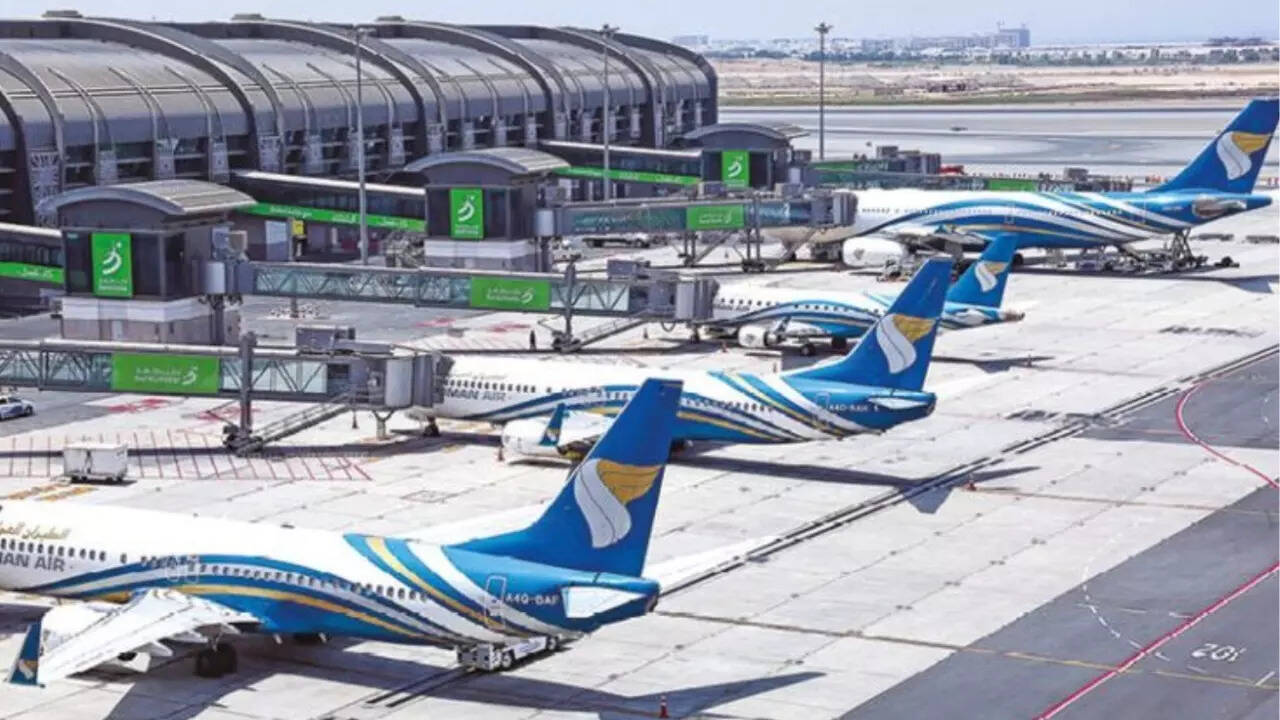
The headlines are screaming about "travel alerts" and "chaos" in the Middle East. They want you to look at Oman Air’s cancellation of flights to nine cities—including heavy hitters like Dubai and Doha—and see a regional airline in retreat. They’re framing this as a desperate reaction to the geopolitical friction between Iran, Israel, and the US.
They are wrong.
What the mainstream travel desk doesn't understand is that these cancellations aren't a sign of weakness. They are a masterclass in aggressive asset reallocation. While every other analyst is obsessing over "airspace disruptions," the real story is about a carrier finally cutting the dead weight of low-margin regional shuttle runs to focus on high-yield survival.
The Geopolitical Scapegoat
The "war" narrative is a convenient shield for a structural pivot that Oman Air needed to make years ago. Yes, flying through the Strait of Hormuz or near Iranian airspace is a logistical headache involving complex $CO_2$ emission calculations and skyrocketing insurance premiums. But let’s be real: if the routes were profitable enough, the planes would still be in the sky.
Aviation isn't a charity. It's a game of pennies and fuel burn. When a carrier cancels flights to cities like Dubai or Doha—routes that are essentially the "bus stops" of the Gulf—they aren't just dodging missiles. They are dodging a price war they can’t win against the likes of Emirates or Qatar Airways.
By citing "airspace disruptions," Oman Air gets to prune its network without the PR nightmare of admitting they are losing the market share battle on these specific legs. It is the perfect corporate smoke screen.
The Myth of the Stranded Passenger
The "People Also Ask" section of your favorite search engine is currently flooded with panicked queries: Is it safe to fly to Dubai? Will my flight to Muscat be cancelled?
The brutal truth? Most of these passengers should never have been on an Oman Air flight to begin with.
For years, regional carriers in the GCC have over-extended themselves, trying to mimic the "hub and spoke" model perfected by Dubai. But Muscat isn't Dubai. It doesn’t have the same transit volume. By cutting these nine cities until March 31, Oman Air is effectively telling the market: "We are no longer your cheap alternative for a forty-minute jump across the border."
If you’re a traveler caught in this, you aren't a victim of a war; you’re a victim of an inefficient business model finally collapsing under the weight of its own fuel bill.
The Math of Sitting Still
Let’s look at the mechanics of an empty tarmac. A Boeing 737 Max sitting on the ground in Muscat costs money in leasing fees and maintenance, but it costs significantly less than flying a half-empty bird through a high-risk corridor.
Consider the variables:
- Insurance Surcharges: War risk premiums can jump 500% overnight when a drone enters a specific FIR (Flight Information Region).
- Fuel Rerouting: Avoiding Iranian airspace adds thirty to ninety minutes to a flight. That isn't just time; it’s tons of Jet A-1 fuel burned for zero additional ticket revenue.
- Crew Timing: Those extra minutes push crews into "timeout" zones, requiring expensive overnight stays and replacement rotations.
When you crunch the numbers, the "disruption" is actually a gift to the Chief Financial Officer. It provides a "Force Majeure" justification to stop the bleeding on routes that were likely underwater even before the first telegram was sent from a regional embassy.
Why the "Status Quo" Analysts are Blind
Most industry insiders will tell you that "consistency is king" in aviation. They argue that if you stop flying a route, you lose the slot, you lose the customer loyalty, and you lose the brand presence.
That is dinosaur thinking.
In 2026, loyalty is a myth sold by credit card companies. Passengers buy on price and Google Flights rankings. Oman Air is betting—correctly—that by the time April 1 rolls around, the market will have a short memory. They are sacrificing the short-term optics of "reliability" to preserve their balance sheet.
I’ve seen airlines burn through their entire cash reserve trying to "maintain a presence" in a conflict zone. It’s vanity. It’s the same ego that drives CEOs to keep loss-leading flagship stores open on Fifth Avenue while their e-commerce burns. Oman Air is being smarter. They are being cold.
The Real Risks Nobody Mentions
While everyone focuses on the "Iran vs US-Israel" theater, the actual danger to your travel plans isn't a stray kinetic event. It’s the Total System Failure of regional air traffic control.
Imagine a scenario where:
- GPS jamming becomes the norm across the Persian Gulf (it already is in several sectors).
- Alternative hubs like Riyadh or Abu Dhabi become so congested with diverted traffic that "holding patterns" last longer than the actual flight.
- Secondary airports are forced to handle wide-body jets they aren't equipped to fuel or service.
That is the chaos Oman Air is avoiding. By bowing out now, they let their competitors deal with the ground delays, the angry mobs at the gates, and the logistical nightmare of rerouting ten thousand people a day through bottlenecked corridors.
Stop Asking if it's Safe
The question isn't "Is it safe to fly?" The question is "Is it worth the hassle?"
If you are traveling for business, you should have switched to Zoom three threats ago. If you are traveling for leisure, you are paying a "stress tax" that no vacation can offset. The industry wants you to believe that "the skies remain open" because they need your departure tax and your duty-free spending.
Oman Air is the only one being honest with you, even if they’re using "security" as a polite euphemism for "this isn't profitable anymore."
The Pivot to "Boutique" Survival
This isn't a temporary suspension. This is a trial run for a smaller, leaner airline.
The GCC aviation market is over-saturated. Between the expansion of Riyadh Air, the dominance of Qatar, and the sheer scale of Emirates, there is no room for a mid-tier carrier trying to be everything to everyone.
By cutting these nine cities, Oman Air is testing a future where they only fly where they have a clear, uncontested advantage. They are shifting from a "me-too" regional player to a boutique carrier.
- Step 1: Blame the war.
- Step 2: Ground the unprofitable fleet.
- Step 3: Re-emerge with a network that actually makes sense.
It’s brilliant. It’s ruthless. And it’s exactly what every other struggling mid-market airline wishes they had the guts to do.
If you’re holding a ticket for March 25, you’re annoyed. If you’re a shareholder, you should be cheering. The "disruption" isn't the story. The refusal to play a losing game is.
Stop looking at the flight board and start looking at the ledger. Oman Air isn't hiding from a war; they're hiding from a bankruptcy filing. And by doing so, they might just be the only regional carrier left standing when the dust actually settles.
Booking a flight to a conflict-adjacent zone right now isn't "brave" or "determined"—it’s a failure to read the room. The airlines are telling you exactly how much they value these routes by abandoning them at the first sign of friction.
Listen to them.
Don't wait for the "all-clear" signal. The map of Middle Eastern travel has changed permanently, and the nine cities currently off the manifest are just the beginning of a much larger contraction that the industry is too scared to admit.
Book a different route or stay home. The era of the cheap, easy Gulf shuttle is dead. Oman Air just had the decency to bury it first.