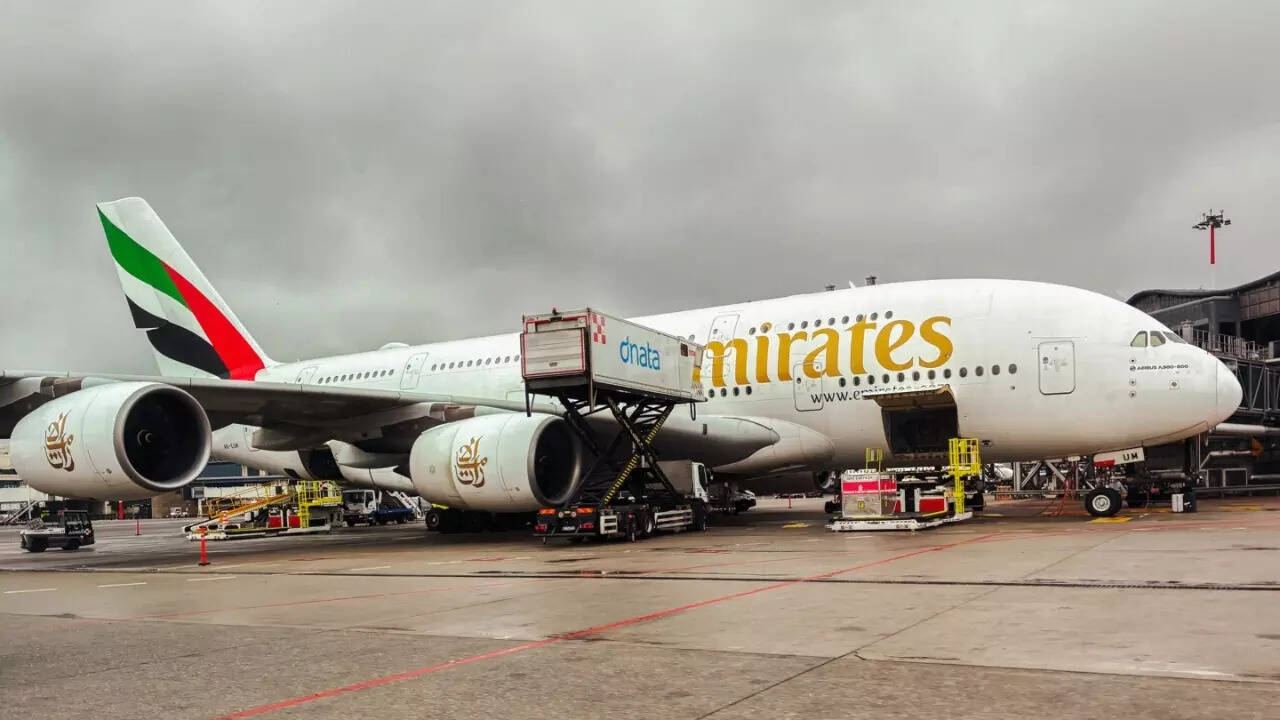
If you’ve been watching the news, you’ve seen the headlines about Dubai International (DXB) and the regional tensions involving Iran, Israel, and the U.S. It’s enough to make any traveler want to cancel their plans and hide under a duvet. But the reality on the ground at DXB is a bit different from the chaotic picture painted by 24-hour news cycles. Emirates has officially resumed its flight schedule after a brief, high-stakes shutdown triggered by a security incident. This wasn’t just a random technical glitch. It was a calculated pause in a region that's currently a geopolitical tinderbox.
You're likely wondering if it's actually safe to board a triple-seven and head into the heart of the Gulf. I’ve seen this play out before. When tensions spike between Iran and Israel, the airspace over the Middle East becomes a complex puzzle of "no-fly" zones and sudden diversions. Dubai sits right in the middle of it. The good news is that Emirates and the UAE General Civil Aviation Authority (GCAA) don't take gambles with safety. If the engines are turning, it’s because they’ve cleared the path.
The Shutdown and Why It Happened
The recent stoppage at Dubai International wasn't a drill. Reports surfaced of a security incident that forced the world’s busiest international hub to hit the brakes. While official statements remained characteristically tight-lipped, the proximity of the conflict between Iran and the U.S.-Israel alliance is the obvious elephant in the room. When missiles start flying or "unidentified objects" enter sensitive airspace, DXB closes. Period.
It’s a massive logistical nightmare. Hundreds of flights were grounded or diverted to nearby airports like Al Maktoum (DWC) or even Muscat and Doha. For Emirates, a carrier that relies on a "hub and spoke" model, even a two-hour closure ripples through the entire network for days. If your flight from London to Sydney via Dubai was canceled, it’s because the airline had to prioritize the safety of the hull and the people inside over your connection time.
Navigating the Chaos of the Iran vs Israel Conflict
The shadow of the Iran-Israel war is long. For years, airlines have navigated "corridors" to avoid volatile areas. But when the conflict heats up, those corridors shrink. We're seeing a situation where Iranian airspace—normally a shortcut for flights heading to Europe or North America from the Gulf—is increasingly avoided.
This means longer flight times. You might notice your "short" hop now takes an extra hour as the pilots loop around the Persian Gulf to stay in "friendly" skies. Emirates has been vocal about its proactive rerouting. They aren't just reacting to the news; they're using sophisticated risk-assessment software to map out paths that stay far away from potential missile trajectories or GPS jamming zones.
What You Need to Do If You Are Booked to Fly
Don't just show up at the airport and hope for the best. That’s a rookie move. If you have a ticket with Emirates or fly through DXB soon, you need a strategy. The situation is fluid. What’s open at 10:00 AM might be a restricted zone by noon.
First, check the Emirates "Flight Status" tool every couple of hours. Don't rely on third-party apps alone. The airline’s own data is the gold standard. Second, make sure your contact details are updated in your booking. I’ve seen people miss out on hotel vouchers or rebooking options because the airline couldn't reach them.
Rebooking and Refund Policies
Emirates is generally quite fair when the "Act of God" or "Geopolitical Incident" cards are played. If your flight was part of the recent shutdown, you're usually entitled to a rebooking at no extra cost.
- Check your travel insurance: Does it cover "civil unrest" or "war-related" delays? Many standard policies have exclusions for this. Read the fine print.
- The 48-hour rule: If a major incident happens, expect the first 48 hours to be total mayhem. If your travel isn't urgent, ask the agent to book you three or four days out instead of the very next flight. You’ll have a much better chance of actually getting a seat.
- Lounge access: If you're stuck at DXB, the lounges will be packed. If you aren't flying Business or First, look into paid entry for Marhaba lounges. It’s worth every penny when the terminal is overflowing with frustrated passengers.
The Safety Question No One Wants to Answer
Is it safe? Honestly, it’s as safe as any high-stakes international travel can be. The UAE has some of the most advanced defense systems in the world. Dubai International isn't just an airport; it’s a crown jewel of the nation's economy. They protect it with everything they've got.
The danger isn't necessarily a direct hit on a passenger jet. The danger is the uncertainty. Diversions mean tired crews, fueled-up planes sitting on hot tarmacs, and massive stress on the air traffic control system. But Emirates pilots are among the best trained in the industry for these specific scenarios. They practice these diversions in simulators constantly.
Practical Steps for the Smart Traveler
Stop doom-scrolling. It doesn't help. Instead, take these concrete steps to protect your trip and your sanity.
Pack a "survival kit" in your carry-on. This isn't about wilderness survival; it’s about airport survival. Include a high-capacity power bank, essential medications for three extra days, and a change of clothes. If your checked bag ends up in a pile in Dubai while you're diverted to Bahrain, you'll thank me.
Download the "DXB" app. It gives real-time updates on gate changes and terminal wait times that are often faster than the big screens in the airport. Also, keep a digital copy of your passport and visa on a secure cloud drive.
If the security situation escalates again, the airline might offer "voluntary travel changes." If you aren't in a rush, take the offer. They might give you a voucher or a free upgrade for a future flight just for staying out of their way while they clear the backlog of stranded passengers.
The skies over Dubai are open again. The planes are moving. But in a world where regional conflicts can flare up in minutes, being an informed, flexible traveler is your best defense. Stay alert, stay patient, and keep your documents handy.