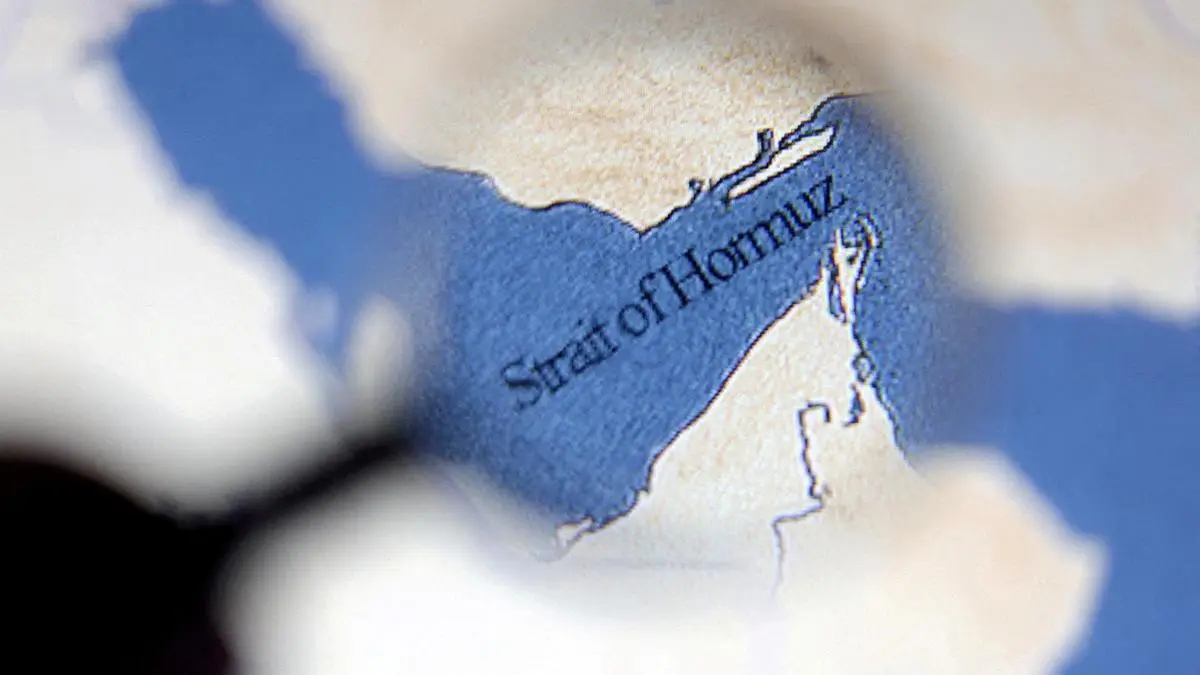
The global energy market operates on a brittle logistical architecture where 20% of the world's daily petroleum consumption passes through a 21-mile-wide chokepoint. While conventional geopolitical analysis views the Strait of Hormuz as a binary "open or closed" gateway, the Iranian naval strategy has shifted toward a sophisticated tiered access model. This strategy weaponizes the ambiguity of "enemy-linked" criteria to exert asymmetric pressure on global shipping without triggering a full-scale kinetic response. The operational reality is no longer about total blockade; it is about the targeted imposition of risk premiums and the redefinition of maritime sovereignty through high-frequency, low-intensity disruption.
The Triad of Iranian Maritime Deterrence
Iran’s approach to the Strait of Hormuz is governed by three distinct operational pillars that allow the Islamic Revolutionary Guard Corps Navy (IRGCN) to calibrate tension levels based on immediate political requirements.
- Legalistic Ambiguity (The Exclusionary Pillar): By claiming the right to inspect or seize "enemy-linked" vessels, Tehran utilizes the United Nations Convention on the Law of the Sea (UNCLOS) selectively. While Iran has signed but not ratified UNCLOS 1982, it relies on the 1958 Convention to argue that "innocent passage" can be suspended if it is deemed prejudicial to the peace, good order, or security of the coastal state. The definition of "enemy-linked" is intentionally fluid, encompassing direct ownership, flags of convenience, or even cargo destined for specific ports.
- Asymmetric Saturation (The Kinetic Pillar): The IRGCN does not seek to match the U.S. Fifth Fleet in tonnage or traditional firepower. Instead, they utilize a swarm-based doctrine involving hundreds of Fast Attack Craft (FAC) and Fast Inshore Attack Craft (FIAC). These vessels, equipped with anti-ship missiles, torpedoes, and naval mines, create a "saturated target environment" where the defensive systems of a high-value asset (like an Arleigh Burke-class destroyer) can be overwhelmed by the sheer volume of incoming vectors.
- The Information-Risk Feedback Loop (The Economic Pillar): The mere threat of interdiction serves as a non-kinetic weapon. When Iran signals a selective "openness" to the Strait, it effectively segments the shipping market. Non-aligned vessels (e.g., Chinese or Russian flagged) maintain lower insurance premiums, while Western-linked vessels face escalating "War Risk" surcharges. This creates a natural economic divergence that punishes Western maritime interests without a single shot being fired.
The Mechanics of Selective Interdiction
The transition from a "freedom of navigation" standard to a "selective access" standard relies on the ability to identify and categorize targets in real-time. This is achieved through an integrated Intelligence, Surveillance, and Reconnaissance (ISR) network that utilizes coastal radar stations, unmanned aerial vehicles (UAVs), and terrestrial Automatic Identification System (AIS) receivers.
The Identification-to-Action Pipeline
The process of "weeding out" enemy-linked ships follows a rigid logical sequence:
- Initial Detection: Long-range coastal radar detects a vessel entering the Traffic Separation Scheme (TSS).
- Electronic Verification: The vessel’s AIS signature is cross-referenced against global shipping databases to identify the beneficial owner, the insurer, and the recent port history.
- Tactical Intercept: If a link to a sanctioned or hostile entity is found, IRGCN assets are deployed for "visual inspection."
- Coercive Boarding: Fast boats use aggressive maneuvering to force a vessel into Iranian territorial waters—often under the guise of "environmental protection" or "navigation violations"—where the legal threshold for seizure is lower.
This pipeline is designed to stay below the threshold of "Act of War." By framing seizures as law enforcement or regulatory actions, Iran complicates the decision-making process for Western naval escorts, who must weigh the risk of escalating a "police matter" into a regional conflict.
The Cost Function of Maritime Security
The presence of U.S. and allied naval forces in the Persian Gulf is an attempt to subsidize the security costs of global trade. However, the cost function is heavily weighted in favor of the disruptor.
The Asymmetric Cost Ratio can be defined as follows:
$$C_{ratio} = \frac{Cost_{Interdiction}}{Cost_{Protection}}$$
In this theater, Iran can deploy a $50,000 Shahed-series drone or a $20,000 naval mine that requires a multi-billion dollar carrier strike group to neutralize. Furthermore, the defensive cost is not merely financial; it is a "readiness drain." Sustained high-alert status for naval personnel and hardware leads to accelerated maintenance cycles and crew fatigue, effectively degrading the long-term operational capacity of the protecting force.
Strategic Bottlenecks and Geographic Constraints
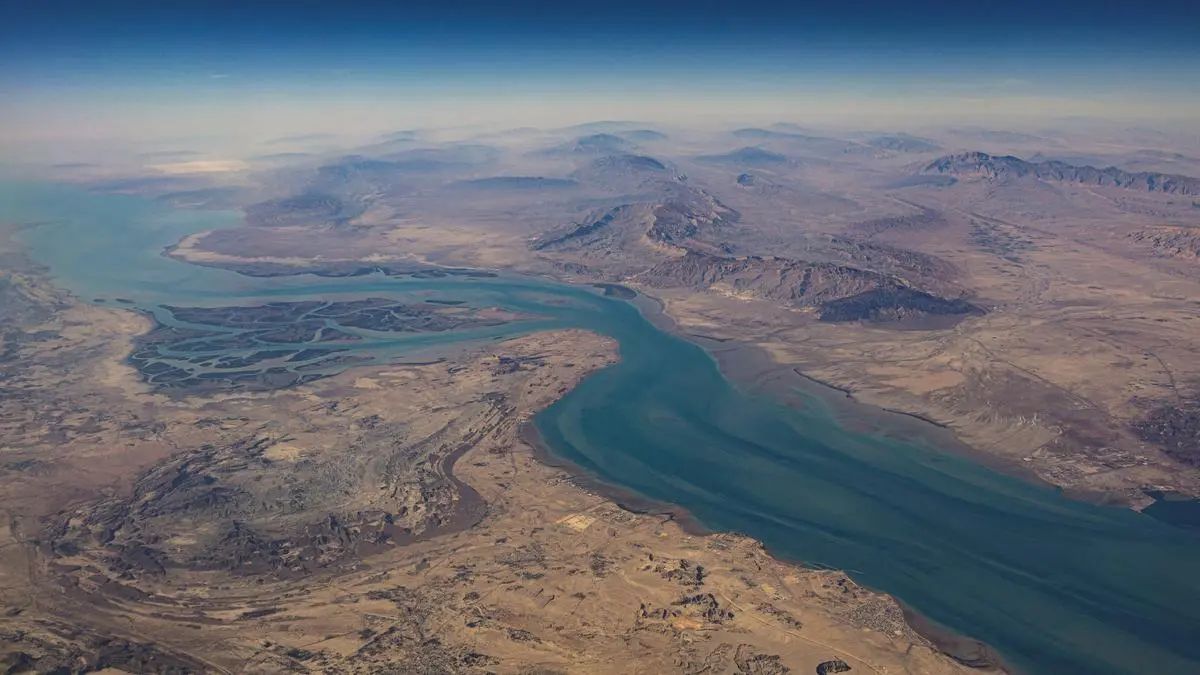
The Strait of Hormuz is not a singular passage but a series of narrow channels governed by the geography of the Musandam Peninsula. The TSS, which organizes traffic into inbound and outbound lanes, is only two miles wide in each direction, with a two-mile separation zone.
The primary constraint for any large-scale naval operation in these waters is Lack of Maneuver Space. Deep-draft tankers are restricted to these lanes, making their movements highly predictable. This predictability allows Iran to pre-position assets at "choke-within-the-choke" points, such as the waters surrounding the islands of Abu Musa and the Greater and Lesser Tunbs. These islands serve as "unsinkable aircraft carriers," providing Iran with forward-deployed missile batteries and radar stations that oversee the entirety of the shipping lanes.
Quantifying the "Enemy-Linked" Variable
What constitutes an "enemy link" in the modern, fragmented world of global shipping? Tehran’s definitions likely target three specific nodes:
- Beneficial Ownership: Vessels owned by entities headquartered in nations currently engaged in "maximum pressure" sanctions or direct kinetic threats.
- Port of Call History: Ships that have recently docked at Israeli ports or terminals involved in the export of contested energy resources.
- Flag State Alignment: Vessels flying flags of nations that have participated in U.S.-led maritime coalitions like Operation Prosperity Guardian.
By targeting these nodes, Iran creates a "Grey Zone" in maritime law. A ship may be flagged in Panama, owned by a Greek firm, and chartered by a British company. By picking one link in this chain to justify an inspection, Iran forces every participant in the global supply chain to conduct their own internal risk assessment, often leading to self-sanctioning and the avoidance of the region altogether.
The Failure of Traditional Deterrence
Traditional deterrence fails in the Strait of Hormuz because it is predicated on the "Rational Actor" model of total war. Western strategy assumes that Iran will not close the Strait because doing so would destroy its own economy, which relies on the same waterway for its exports.
This logic misses the Selective Disruption loophole. Iran does not need to close the Strait to "all." It only needs to make it untenable for "some." If Iran can successfully exclude "enemy-linked" ships while allowing "friendly" (Chinese, Indian, Russian) ships to pass, it achieves three strategic goals:
- It fulfills its export obligations to its primary buyers.
- It creates a direct cost for its adversaries' economies.
- It proves that the U.S. security guarantee is conditional and ineffective.
The transition from a global commons to a contested, policed waterway is the ultimate objective. This is a move toward Maritime Suzerainty, where passage is not a right but a privilege granted by the local hegemon.
The Logistical Counter-Measures and Their Limitations
In response to this shifting paradigm, several regional and global actors have attempted to build "Hormuz Bypasses."
- The East-West Pipeline (Saudi Arabia): Transports oil from the Eastern Province to the Red Sea. Current capacity is approximately 5 million barrels per day (bpd), but it is vulnerable to disruption at the Bab el-Mandeb strait.
- The Habshan–Fujairah Pipeline (UAE): Bypasses the Strait entirely, terminating at the Gulf of Oman. Capacity is roughly 1.5 million bpd.
- Alternative Transport (Trucking/Rail): These methods lack the scale to replace VLCCs (Very Large Crude Carriers), which can hold 2 million barrels each.
The bottleneck persists because the aggregate capacity of these bypasses does not exceed 40% of the total volume flowing through Hormuz. The global economy remains tethered to the Strait, and therefore to the whims of the IRGCN’s "enemy-linked" classification system.
Strategic Recommendation: Shifting from Escort to Interdiction Parity
The current "defensive escort" model is unsustainable and plays into the IRGCN’s exhaustion strategy. To counter the tiered access model, maritime powers must move toward a Sovereignty Reciprocity framework.
The immediate tactical play is the implementation of "Counter-Interdiction Zones." Rather than shadowing tankers, allied forces should establish a permanent presence at the entry points of the TSS, utilizing autonomous surface vessels (USVs) to provide a persistent, low-cost sensor web. Any attempt by IRGCN assets to divert a vessel must be met with immediate electronic warfare (EW) interference to sever the link between the boarding party and their command center.
Furthermore, the legal battle must be centralized. Flag states must collectively pre-certify vessels as "Neutral Entities" under a unified maritime registry. Any interference with a pre-certified vessel must trigger automatic, pre-planned economic sanctions against the specific IRGCN-linked companies that manage Iranian port infrastructure.
The goal is to increase the Cost of Harassment until it exceeds the Benefit of Political Signaling. Until the IRGCN perceives a direct threat to its own logistical and financial hubs, the "enemy-linked" pretext will continue to be used as a scalpel to bleed the efficiency of global trade.
Western analysts must stop asking if Iran will close the Strait. They must start asking how to operate in a Strait that is perpetually "half-closed" by design. The era of the open maritime commons in the Middle East has ended; the era of the managed, high-risk corridor has begun.