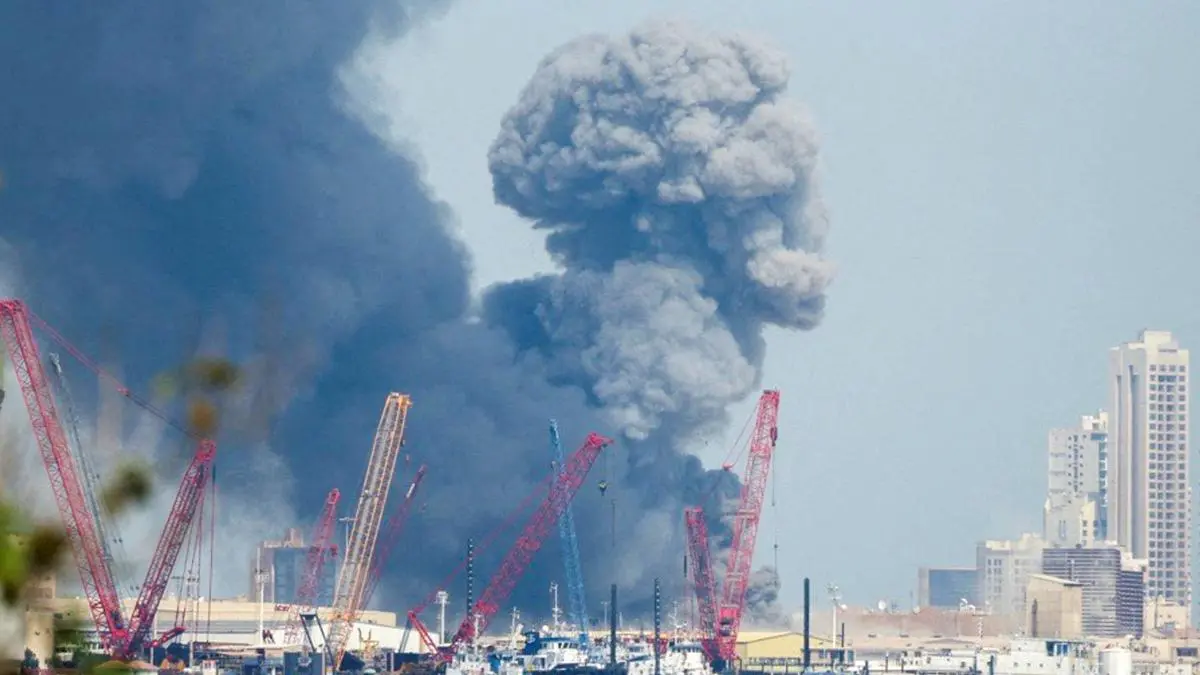
The current friction between the United States and the Islamic Republic of Iran is not a collision of ideologies but a conflict of asymmetric cost-benefit models. When Washington issues an ultimatum regarding regional stability, Tehran does not calculate its response in terms of matching conventional military force. Instead, it operates through a doctrine of "Distributed Disruption," where the primary objective is to manipulate the global cost of energy to offset the localized pressure of economic sanctions. This strategy relies on the high vulnerability of fixed energy infrastructure compared to the low cost of precision-guided munitions and unmanned aerial systems (UAS).
The Three Pillars of the Iranian Deterrence Architecture
Iran’s ability to threaten Middle Eastern infrastructure rests on three distinct operational layers. Understanding these layers is necessary to assess the validity of any threat issued in response to diplomatic or military pressure.
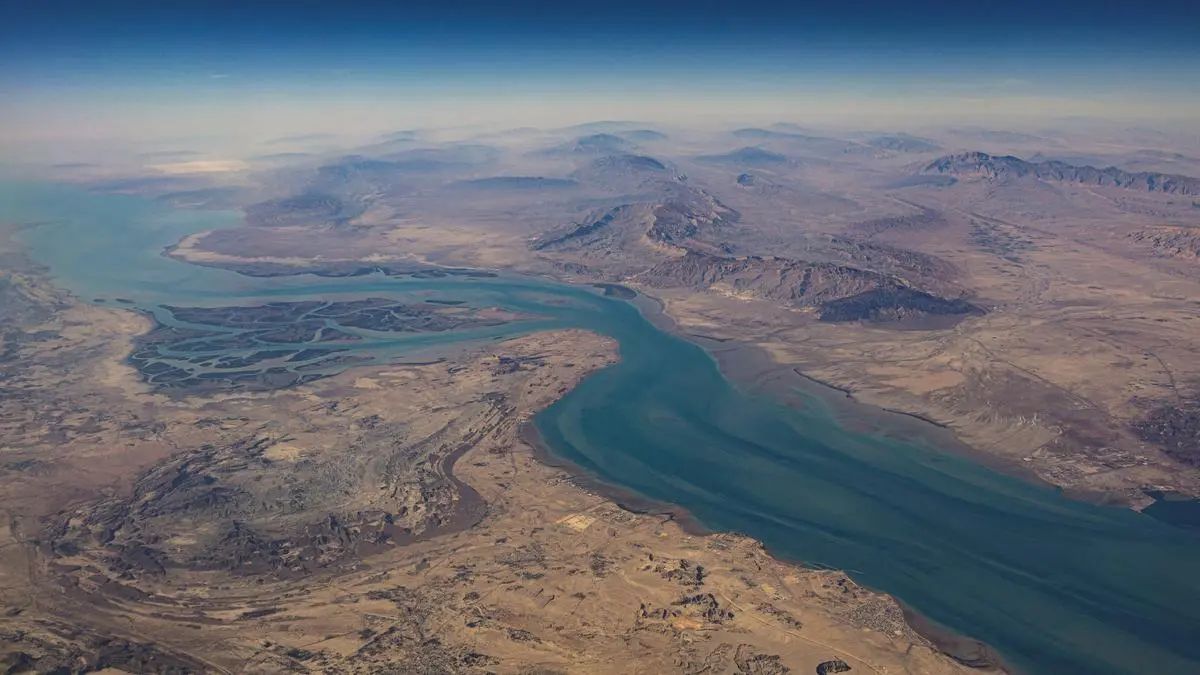
- Proximal Denial (The Strait of Hormuz): This is the most visible lever. Roughly 21 million barrels of oil pass through this chokepoint daily. Iran utilizes a "Swarm and Mine" tactic, employing hundreds of fast-attack craft and bottom-moored sea mines. The goal here is not to win a naval battle against the U.S. Fifth Fleet, but to raise insurance premiums and freight rates to a level that triggers a global recession.
- Remote Kinetic Attribution (The UAS/Cruise Missile Axis): The 2019 Abqaiq–Khurais attack demonstrated that Iran can strike critical processing nodes deep within sovereign territory without using its own soil as a launch point. By leveraging the Houthi movement in Yemen or militias in Iraq, Tehran creates a "deniability gap" that complicates the legal and political justification for a direct counter-strike.
- Cyber-Physical Degradation: Beyond physical explosives, the threat to infrastructure now includes the targeting of Industrial Control Systems (ICS) and Supervisory Control and Data Acquisition (SCADA) networks. Disrupting the cooling systems of a refinery or the pressure sensors of a transcontinental pipeline achieves the same economic result as a missile strike with a significantly lower risk of immediate kinetic escalation.
The Cost Function of Infrastructure Vulnerability
To quantify the threat to Middle Eastern infrastructure, one must look at the "Recovery Time Objective" (RTO) of specific energy assets. Modern oil and gas facilities are highly centralized. A single strike on a de-sulfurization unit or a stabilizer plant can take months to repair due to the lead times required for custom-engineered components.
The economic impact is governed by the following relationship:
$$Total Loss = (Daily Production \times Price per Barrel \times Days Offline) + Repair CapEx + Market Volatility Premium$$
When Iran threatens "infrastructure," they are targeting the $Days Offline$ variable. By selecting "long-lead" components—parts that cannot be bought off the shelf—they maximize the duration of the supply shock. This is a tactical evolution from the "Tanker War" of the 1980s. During that era, the target was the commodity in transit. Today, the target is the production capacity itself.
Strategic Logic of the Ultimatum Response
The U.S. "ultimatum" creates a binary choice for the Iranian leadership: compliance or escalation. From a game theory perspective, compliance without concessions is viewed as strategic suicide by the Revolutionary Guard (IRGC). Therefore, escalation becomes the rational choice to restore a balance of fear.
The mechanism of this escalation follows a predictable path of "Calculated Proportionality":
- Phase 1: Signaling. Increased naval drills, GPS jamming in the Persian Gulf, and aggressive maneuvers near commercial shipping.
- Phase 2: Peripheral Sabotage. Limpet mine attacks on tankers or drone strikes on uninhabited pipeline sections. These acts test the international appetite for conflict without causing mass casualties.
- Phase 3: Core Infrastructure Interdiction. Direct strikes on desalination plants or major export terminals. This is the "nuclear option" of conventional warfare, as it directly threatens the domestic stability of Gulf Cooperation Council (GCC) states.
The Bottleneck of Regional Defense Systems
A common misconception is that the presence of advanced missile defense systems like the MIM-104 Patriot or the Terminal High Altitude Area Defense (THAAD) renders these threats toothless. This ignores the physics of saturation.
The cost-exchange ratio heavily favors the attacker. A single interceptor missile can cost between $2 million and $4 million. In contrast, an Iranian Shahed-series loitering munition costs approximately $20,000 to $50,000. By launching a synchronized swarm of fifty drones, an adversary can deplete a battery’s magazine or overwhelm the radar’s tracking capacity for a fraction of the cost of the defense. Furthermore, current radar systems struggle with the "low and slow" flight profiles of small drones, which use terrain masking to avoid detection until they are within the "terminal phase" of their flight, where reaction time is measured in seconds.
The Desalination Vulnerability: A Humanitarian Lever
While the focus remains on oil, the most critical infrastructure in the Middle East is actually water. GCC nations rely on desalination for up to 90% of their potable water. These plants are massive, fixed, and coastal.
An attack on a major desalination plant like Al-Jubail in Saudi Arabia would create an immediate humanitarian crisis that requires state resources to be diverted from military or economic objectives to basic survival. This "civilian-centric" threat acts as a powerful deterrent against GCC states providing their territory as a staging ground for U.S. operations against Iran. It turns the host nation’s geography into a liability.
Energy Market Psychosis and the Risk Premium
The efficacy of an Iranian threat is not solely dependent on its execution but on its perception. The global energy market operates on a "fear index." Even if no physical damage occurs, the mere positioning of Iranian Kilo-class submarines or the movement of Fateh-110 missiles toward the coast can trigger a "war risk premium" in Brent Crude pricing.
This creates an indirect tax on the Western economy. If the price of oil rises by $10 per barrel due to perceived instability, it generates a massive inflationary tailwind in the U.S. and Europe. For Iran, this is a victory. They have successfully exported their economic pain back to the source of the sanctions without firing a single shot.
Structural Limitations of the Deterrence Strategy
Despite the potency of these threats, the Iranian model faces three significant constraints that prevent it from being a permanent solution to Western pressure.
- The Threshold of Total War: There is a "Red Line" which, if crossed, triggers a kinetic response that would dismantle the Iranian state apparatus. Tehran must constantly calibrate its aggression to stay just below the level that would force a full-scale U.S. or Israeli invasion.
- Technological Obsolescence: Directed Energy Weapons (DEW), such as high-energy lasers, are beginning to shift the cost-exchange ratio back toward the defender. Once lasers can reliably intercept drones for the cost of the electricity used to fire them, the "swarm" tactic loses its economic advantage.
- Revenue Dependency: Iran still needs to sell its own oil (largely to China) to survive. A total closure of the Strait of Hormuz would starve the Iranian economy as effectively as it would damage the West, creating a "Mutual Assured Destruction" scenario in the energy sector.
Operational Forecast for Energy Security
If the U.S. maintains its hardline ultimatum, the immediate operational shift will likely occur in the "Gray Zone"—actions that fall between normal diplomacy and open warfare.
Expect a surge in "unattributed" maritime incidents. This will likely involve the use of Unmanned Underwater Vehicles (UUVs) to target undersea fiber-optic cables or pipeline manifolds. This approach offers the highest degree of deniability while hitting the most sensitive part of the global economy: the data and energy flow that powers modern markets.
The strategic priority for regional actors must move away from centralized "mega-projects" and toward modular, distributed infrastructure. Hardening the perimeter of a 500,000-barrel-per-day refinery is a losing game; creating redundant, smaller-scale processing units and investing in mobile desalination units is the only path to reducing the leverage of kinetic threats.
Hardened defenses should focus on the "Terminal Defense" layer—C-RAM (Counter Rocket, Artillery, and Mortar) and electronic warfare jamming—rather than relying on high-altitude interceptors. The threat is no longer the ballistic missile descending from space; it is the "suicide" drone navigating through a mountain pass at 100 feet. Any strategy that fails to account for this shift in the geometry of the battlefield is fundamentally obsolete.