The snow in Ust-Kamenogorsk does not stay white for long. It falls, a pristine blanket from the Siberian sky, and within hours it begins to bruise. A dull, charcoal gray seeps through the crystals, followed by a jaundiced yellow that suggests the earth itself is falling ill.
In this corner of eastern Kazakhstan, the air has a flavor. It is a sharp, electric tang that clings to the back of the throat, a metallic ghost that no amount of tea can exorcise. For the people living in the shadow of the chimneys, this isn’t just "pollution." It is the atmosphere of their lives. It is the invisible tax paid for the world’s obsession with high-performance flight and the sleek promise of carbon neutrality.
France, thousands of miles to the west, looks at this region and sees a strategic lifeline. The aerospace giants in Toulouse and the defense contractors in Paris require titanium—a "wonder metal" that is as strong as steel but half the weight. Without it, the Airbus A350 doesn't fly. The Rafale fighter jet stays grounded. The transition to lighter, more fuel-efficient travel depends on the heavy, suffocating industry of the Kazakh steppe.
But while the titanium shines on the fuselage of a brand-new jet, the process of extracting it leaves a darker signature behind.
The Geography of a Cough
Imagine a woman named Elena. She is a composite of the voices that rise from the valley, a grandmother who remembers when the mountains were visible every day of the week. Now, she checks the wind direction before opening a window. If the breeze comes from the direction of the Ukzk—the Ust-Kamenogorsk Titanium and Magnesium Plant—the windows stay shut.
Elena’s grandson has a cough that never truly leaves. It is a dry, hacking sound that punctuates his sleep. In the local clinics, doctors see "respiratory distress" as a baseline, not an exception. The cocktail of gases released here is complex: sulfur dioxide, nitrogen oxides, and a slurry of heavy metal particulates that are small enough to bypass the lungs and enter the bloodstream directly.
The statistics tell one story: levels of lead and zinc in the soil are sometimes ten times the legal limit. But the human body tells a more visceral version. In Ust-Kamenogorsk, the "cocktail" isn't a metaphor. It’s a chemical reality that residents inhale with every breath.
The dilemma is a jagged one. This plant is one of the largest titanium producers on the planet. It provides the backbone of the regional economy, employing thousands and keeping the lights on in a city that might otherwise wither. For the workers, the plant is a provider. For the inhabitants, it is a predator.
The Invisible Chain of Supply
We often speak about "green" technology as if it appears by magic, clean and birthed from a laboratory. We forget the heavy machinery, the smelting pots, and the scorched earth required to produce the materials for a "sustainable" future. Titanium is the perfect example.
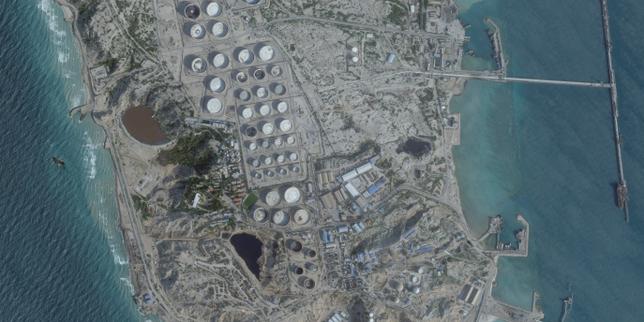
To turn raw ore into a high-grade sponge of titanium, the industrial process requires immense heat and aggressive chemical reactions. This isn't a boutique workshop; it is a gargantuan, roaring beast of a factory. The byproduct is a haze that settles over the Irtysh River, a fog that smells of sulfur and old pennies.
France’s relationship with this site is born of necessity. Following the geopolitical shifts of the last several years, Europe has scrambled to decouple its supply chains from Russia. Kazakhstan stepped into that vacuum, becoming a primary partner for the French aerospace industry. It is a partnership celebrated in diplomatic circles as a triumph of diversification and economic cooperation.
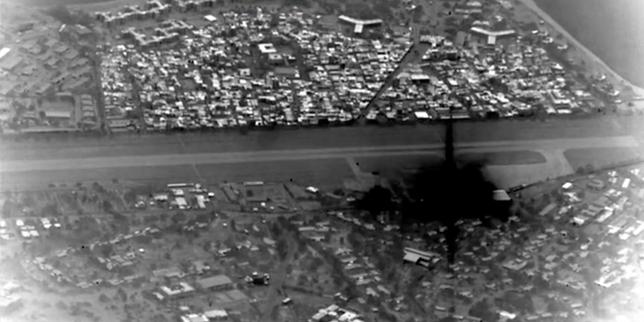
Yet, there is a disconnect between the boardroom in Paris and the balcony in Ust-Kamenogorsk. When a French minister shakes hands with a Kazakh executive, they are discussing tonnage, purity levels, and logistics. They are rarely discussing the color of the snow or the rising rates of asthma in the primary school three miles downwind from the blast furnaces.
The Price of Weightlessness
Why do we need this metal so desperately?
Consider the physics. If you want to move three hundred people across the Atlantic while burning the least amount of fuel possible, you must fight gravity. Titanium is the primary weapon in that fight. It resists corrosion, handles extreme heat, and allows engineers to shave tons off the weight of an aircraft.
By making planes lighter, we reduce global carbon emissions. This is the great irony of the modern age: to save the global climate, we are willing to sacrifice local environments. We trade the lungs of a Kazakh child for a slightly smaller carbon footprint in the European sky.
The locals are not oblivious. They know their city is a sacrifice zone. They see the trucks loaded with ingots heading for the border, destined for the high-tech factories of the West. They see the wealth moving out while the particulate matter stays behind, settling into the riverbeds and the garden soil where they grow their potatoes.
A Silence That Echoes
There is a specific kind of quiet that falls over a town when everyone knows the truth but feels powerless to change it. Reporting on environmental issues in this region is a delicate dance. Activists walk a thin line between advocating for their health and being accused of sabotaging the national economy.
The plant management often points to modernization efforts. They speak of new filters, updated scrubbers, and "ecological roadmaps." And perhaps, on paper, the numbers are improving. But the legacy of decades of industrial intensity is baked into the land. The heavy metals don't just vanish because a new filter was installed last Tuesday. They linger in the silt of the river. They wait in the dust of the playgrounds.
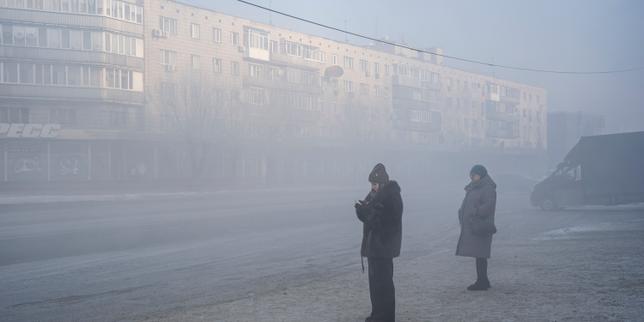
The air remains thick. On the worst days, the sun is a pale, sickly disc, struggling to pierce through a shroud of industrial smog. On those days, the city feels claustrophobic, trapped between the mountains and the invisible walls of its own making.
The Moral Calculus
We like to believe that our choices as consumers are clean. We buy a ticket on a modern jet and feel a sense of progress because the engines are quieter and the fuel burn is lower. We trust the labels. We trust the "sustainable" branding of the airlines.
But if we followed the trail of that titanium back to its source, we would find ourselves standing on a slushy street in Ust-Kamenogorsk. We would see the yellow snow. We would hear the rhythm of a persistent cough coming from a second-story apartment.
The reality of our interconnected world is that there is no "away." When we throw something away, it goes somewhere. When we source something "elsewhere," that elsewhere is someone’s home. The titanium in the sky is inextricably linked to the toxic cocktail on the ground.
Until the cost of a plane ticket reflects the cost of a child’s inhaler, the math remains broken. We are living on borrowed breath, exported from a place where the air is no longer free.
The wind shifts. Elena closes her window, the latch clicking with a finality that feels like a surrender. Outside, the chimneys continue their slow, relentless exhale, painting the sky in shades of gray that have no name in any language but the one spoken in the clinics of the valley.
The jet overhead, glinting in the high, clean sunlight, leaves a white contrail that vanishes in seconds. Below it, the yellow fog stays. It waits. It settles.