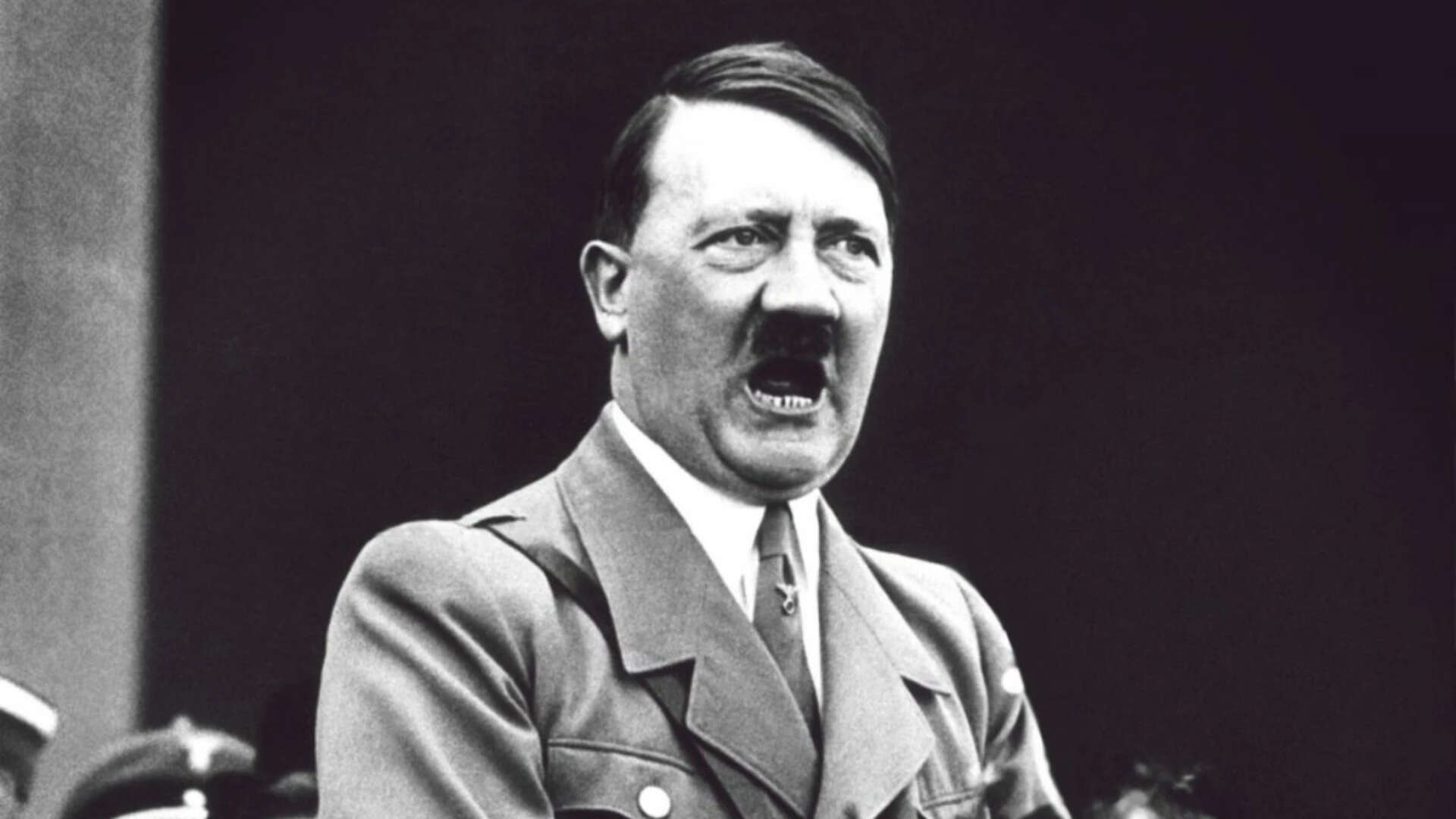
Walk through any major book market in Lahore or Karachi, from the sprawling stalls of Urdu Bazaar to the polished shelves of high-end malls, and you will find a familiar face staring back from a silver-and-red spine. Adolf Hitler’s Mein Kampf remains a perennial bestseller in Pakistan, often translated into Urdu and sold alongside religious texts, self-help manuals, and mainstream thrillers. This isn’t an underground phenomenon or a niche subculture of neo-Nazis. It is a visible, public, and remarkably casual fascination that often baffles Western observers.
The resonance of a 20th-century European dictator in a South Asian nuclear power is not driven by an adoption of Nazi racial hierarchy. In fact, if Hitler’s theories were applied to the subcontinent, the very people buying his book would be categorized as sub-human. Instead, the "admiration" is a cocktail of historical grievance, a vacuum in local education, and a distorted view of what constitutes "strong leadership." It is a phenomenon born from the intersection of anti-colonial resentment and a modern identity crisis.
The Myth of the Disciplined Strongman
In a country that has spent roughly half its existence under military rule, the concept of the "strongman" carries a heavy, often romanticized weight. Many Pakistanis view their own history as a cycle of chaotic, corrupt civilian rule interrupted by periods of "disciplined" military intervention. In this framework, Hitler is frequently stripped of his atrocities and rebranded as a master of national discipline.
For the average consumer of this narrative, Hitler represents a leader who took a broken, hyper-inflated, and humiliated nation and turned it into a global powerhouse within a decade. They see the Autobahn, the scientific advancements, and the sheer defiance of Western powers. They do not see—or choose to ignore—the industrial-scale slaughter or the fact that his leadership ultimately led to the total annihilation of his own country. This selective memory allows the image of the Führer to serve as a placeholder for the "saviour" figure many feel is missing from their own political landscape.
The fascination is often superficial. It is the aesthetics of power. The Hugo Boss uniforms, the organized rallies, and the rhetoric of national purity appeal to a population that feels its own state institutions are crumbling or inefficient. It is an admiration of efficiency over ethics, a dangerous trade-off that occurs when people are desperate for order.
The Enemy of My Enemy
One cannot discuss this topic without addressing the geopolitical elephant in the room. In Pakistan, the lens through which much of the world is viewed is shaped by the ongoing conflict with India and the perceived injustices in Palestine.
Because the Holocaust is the foundational tragedy that led to the creation of the State of Israel, and because Pakistan does not recognize Israel, there is a reflexive, often toxic tendency to view Hitler as a "hero" simply because he opposed the people who would later become the adversaries of the Muslim world. It is a crude application of the logic that "the enemy of my enemy is my friend," regardless of the fact that the "friend" in this case was a genocidal maniac.
This sentiment is compounded by a profound lack of education regarding the Holocaust. In most Pakistani schools, the Second World War is taught as a series of tactical maneuvers and colonial shifts. The systematic extermination of six million Jews is often reduced to a footnote or, in more radicalized circles, dismissed as "Western propaganda." When the magnitude of the crime is erased, only the image of the defiant rebel remains.
The Anti-Colonial Distortion
There is also a lingering historical resentment toward the British Empire. For some, anyone who brought the British to their knees is viewed with a degree of instinctive sympathy. During the 1940s, certain segments of the anti-colonial movement in India—most notably Subhas Chandra Bose and his Indian National Army—sought alliances with the Axis powers to oust the British.
While the primary leaders of the Pakistan movement, such as Muhammad Ali Jinnah, maintained a legalistic and pro-Allied stance, the "rebel" energy of those who fought the British persists in the cultural subconscious. Hitler is seen by some not as a fascist, but as the man who broke the back of the Empire that colonized the subcontinent. It is a historical irony that the very ideology that would have enslaved the East is cheered because it weakened the masters who were already there.
The Failure of the Education System
The persistence of Hitler’s popularity is a stinging indictment of the Pakistani curriculum. History in Pakistani schools is often presented as a teleological march toward the creation of the state in 1947. Anything that happened outside the direct line of Islamic history or the independence movement is treated with a detached, almost clinical brevity.
When students are not taught the human cost of fascism, they are left vulnerable to the "Great Man" theory of history. They see the rise of the Third Reich as a blueprint for national recovery rather than a cautionary tale of moral collapse. This vacuum is filled by cheap, poorly translated editions of Mein Kampf that frame Hitler as a misunderstood patriot.
Furthermore, the rise of social media and "digital demagogues" in Pakistan has amplified these distortions. Short, edited clips of Hitler’s speeches—translated with subtitles emphasizing "national pride" and "standing up to the world"—go viral on platforms like TikTok and WhatsApp. These snippets bypass critical thinking, reaching a young population that is tech-savvy but historically illiterate.
The Global Rise of the Far Right
Pakistan is not an island. The creeping normalization of authoritarianism and far-right rhetoric is a global trend. From the rise of Hindutva in neighboring India to the populist movements in Europe and North America, the "strongman" model is back in fashion.
In Pakistan, this manifests as a synthesis of religious nationalism and a desire for a centralized, uncompromising authority. The admiration for Hitler is often a proxy for a local desire to "cleanse" the nation of perceived internal enemies—be they corrupt politicians, ethnic minorities, or dissenting voices. It is the language of fascism translated into a local dialect.
The danger is that this admiration provides a psychological bridge to homegrown extremism. If you can justify the actions of a dictator in 1930s Germany, it becomes much easier to justify the suspension of civil liberties or the persecution of minorities in 21st-century Pakistan.
Breaking the Mirror
Addressing this issue requires more than just condemning the presence of a book on a shelf. It requires a fundamental overhaul of how history is taught and how "power" is defined in the national psyche.
The fascination with Hitler in Pakistan is a symptom of a deeper malaise—a feeling of powerlessness on the global stage and a frustration with domestic instability. Until the country can develop a robust, democratic identity that provides its citizens with a sense of dignity and progress, the ghost of the European dictator will continue to find a home in the bookstalls of Lahore.
The focus must shift from the tactical "successes" of authoritarianism to the inevitable human wreckage it leaves behind. It is not enough to say that Hitler was "bad." It is necessary to show that the very mechanisms of his power—the suppression of dissent, the cult of personality, and the obsession with purity—are the same mechanisms that lead to the ruin of any nation that adopts them, regardless of geography or religion.
The next time you see that silver-and-red book in a Karachi market, understand that you aren't looking at a sign of ideological alignment. You are looking at a desperate, misguided search for a way out of a national crisis. The solution isn't found in the rhetoric of a dead dictator, but in the painstaking work of building institutions that are stronger than any single man.
Engage with local educators to advocate for a broader, more human-centric world history curriculum that includes the lived experiences of those targeted by 20th-century fascists.