The "everyone loses" trope is a lie we tell ourselves to feel civilized. It is a comforting, sedative myth designed to ignore the brutal mechanics of how humanity actually moves forward. We cling to the idea that peace is the natural state of prosperity, yet history suggests peace is often just the period of stagnation where we consume the innovations birthed by the previous conflict.
If you look at the macro-historical data, the "no winners" argument falls apart under the weight of every major technological leap of the last century. We don’t have the internet, jet engines, or nuclear power because a committee of well-meaning pacifists sat in a room and brainstormed "synergy." We have them because survival demanded them.
The Innovation Tax Paid in Blood
Conflict is the only force capable of overriding the inherent bureaucracy and risk-aversion of the human species. In peacetime, research and development are strangled by quarterly earnings, ethical debates, and "safe" incrementalism. War removes the safety. It replaces the incentive of profit with the incentive of existence.
Consider the development of the jet engine. Before 1939, Frank Whittle and Hans von Ohain were treated as eccentric fringe theorists. Their respective governments barely gave them the time of day. Once the prospect of total aerial annihilation became real, the funding didn't just trickle in—it flooded. The leap from the propeller-driven biplanes of the 1930s to the Me 262 and the Gloster Meteor happened in less than a decade.
In a world of perpetual peace, that transition would have taken forty years of board meetings and regulatory hurdles. We are currently living on the "peace dividend" of technologies that were forged in the furnace of existential dread. To say "everyone loses" is to ignore the fact that the very device you are using to read this exists because of the Cold War race for miniaturized circuitry and global communications.
The Efficiency of Destruction
Economists often point to the "Broken Window Fallacy"—the idea that breaking a window and paying to fix it doesn't actually create wealth. They are right on a micro level, but they miss the systemic restructuring that war forces upon a stagnant economy.
War is the ultimate auditor. It identifies every inefficiency, every bloated department, and every useless social structure and burns them away.
- Labor Mobilization: It forces a total re-evaluation of human capital. World War II did more for the economic empowerment of women than fifty years of prior advocacy because the alternative was industrial collapse.
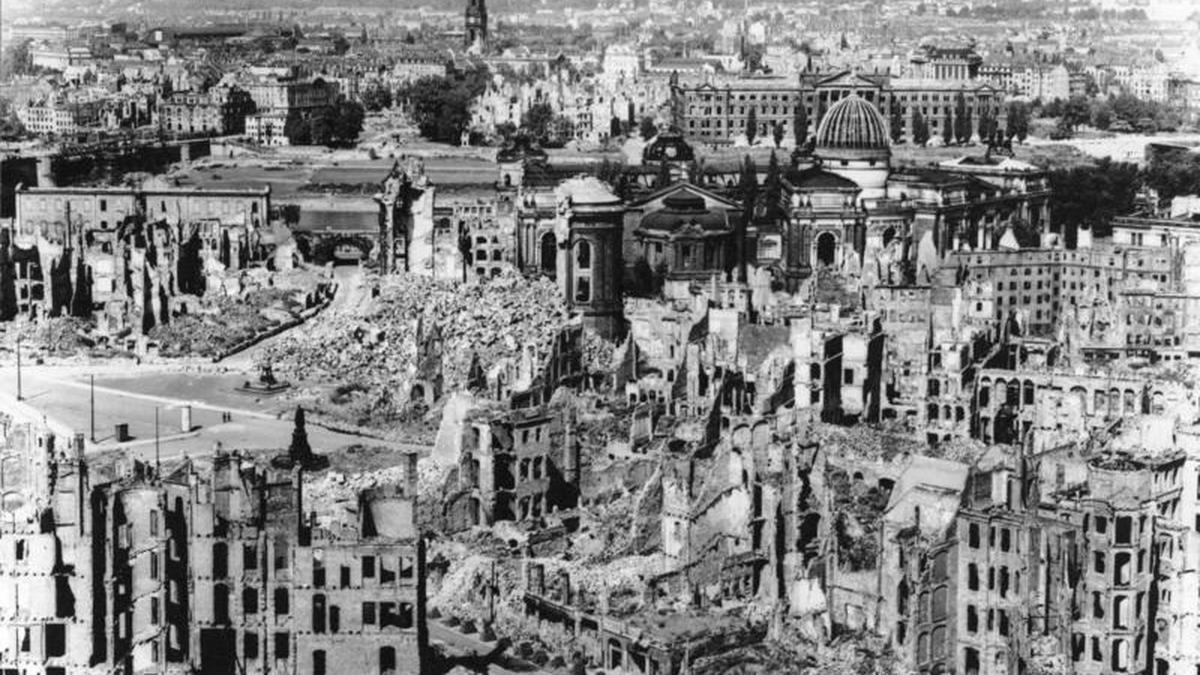
- Infrastructure Reset: While the physical destruction is horrific, the rebuilding phase allows for the implementation of modern, optimized systems. Look at the post-war industrial grids of West Germany and Japan. By 1960, they weren't just recovered; they were outperforming the victors because their legacy systems had been erased, allowing for a total technological "re-skin."
- Medical Acceleration: Penicillin went from a laboratory curiosity to a mass-produced global commodity because soldiers were dying of infection. The triage systems, trauma surgery techniques, and prosthetic advancements we use today were written in the field hospitals of the 20th century.
If you find this perspective "cold," you are reacting to the morality, not the math. The math shows that war is a violent, high-speed upgrade to the operating system of civilization.
The Sovereignty of the Victor
The "everyone loses" camp loves to cite the cost of war—the trillions of dollars, the debt, the lives. This is a shallow accounting. It calculates the cost of the hardware but ignores the value of the outcome: the right to define the future.
Victory is the ultimate commodity. It is the ability to dictate global reserve currencies, set international trade laws, and establish the cultural hegemony that governs the next century.
Imagine a scenario where the Allied powers took the "nobody wins" stance in 1941 and sought a stalemate to avoid economic loss. The resulting world would not have been "richer." It would have been a fractured, dark-age nightmare of competing totalitarian blocs. The "winner" of that war didn't just get a trophy; they got to build the modern financial system (Bretton Woods) and the framework for global stability that has allowed for the longest period of relative peace in human history.
The winner gets everything. The loser gets erased or absorbed. To suggest there is no difference is a luxury of the protected.
The Myth of the Passive Progressor
We like to think that we would have invented the computer anyway. We tell ourselves that space exploration was an inevitable hobby for a curious species.
It wasn't.
Space exploration was a ballistic missile program with a public relations department. The Saturn V rocket was the direct descendant of the V-2. We didn't go to the moon for "the benefit of mankind"; we went because whoever held the high ground could drop a nuke anywhere on the planet with impunity.
Peaceful societies are historically the most stagnant. Without the external pressure of a rival, internal systems become sclerotic. Corruption grows. Innovation slows to a crawl because there is no penalty for being slow. Conflict provides the external pressure that forces a system to maintain peak performance.
The Brutal Honesty of the "People Also Ask"
"But isn't the human cost too high?"
From a moral standpoint, yes. From a structural standpoint, the cost is the price of the leap. We are comfortable today because someone else paid that price eighty years ago. Your moral outrage is subsidized by their sacrifice.
"Doesn't war destroy the economy?"
It destroys current wealth to create the conditions for future growth. It is a violent redistribution of resources from the old, the static, and the inefficient to the young, the dynamic, and the strategic.
"Can't we innovate without killing each other?"
We could, but we don't. Humanity has never shown a sustained ability to innovate at "war speed" during times of comfort. We are a species that requires a knife at our throat to do our best work.
The Reality of the "New War"
We are currently in a state of perpetual gray-zone conflict—cyber warfare, economic coercion, and information dominance. The people telling you "there are no winners" are the ones losing the current skirmish. They want you to stop competing so they can catch up.
The winners of the 21st century won't be the ones who preach the loudest about peace. They will be the ones who recognize that competition is the only constant. They will use the friction of conflict to sharpen their technology, harden their infrastructure, and dominate the digital landscape.
Stop looking for a win-win scenario. It doesn't exist in the historical record. There is only the side that evolves and the side that becomes a footnote.
Adapt to the friction or get ground down by it.