Washington’s latest military gamble involves more than just aircraft carriers and troop deployments. The Pentagon is quietly moving almost its entire inventory of stealthy long-range missiles toward the Middle East. It’s a massive bet on a single theater of war. If you’re looking at the numbers, the U.S. is essentially stripping its Pacific defenses to prepare for a knockout blow against Iran. This isn't just a routine rotation. It’s a desperate concentration of firepower that tells us exactly how scared the White House is of Iran's integrated air defenses.
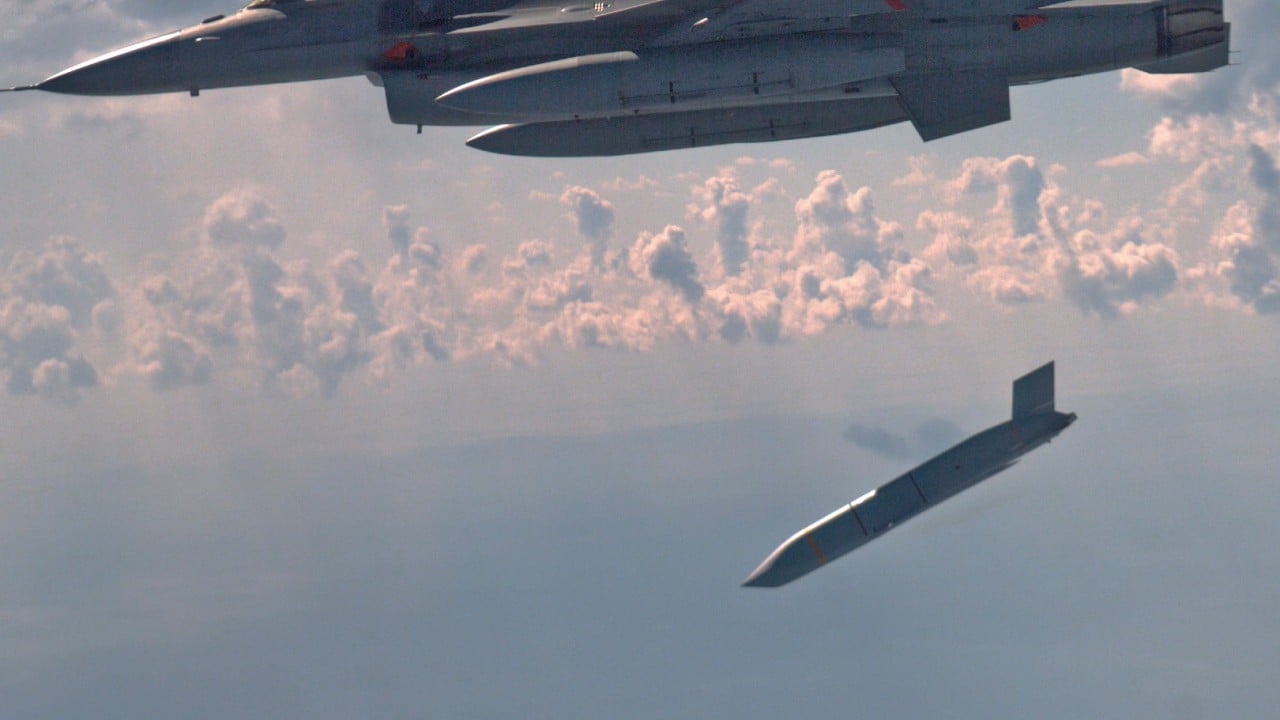
The weapons in question are primarily the AGM-158B JASSM-ER (Joint Air-to-Surface Standoff Missile - Extended Range). These aren't your grandfather’s Tomahawks. They’re designed to fly 600 miles, hugging the terrain, while staying invisible to radar. If a conflict with Iran breaks out, these missiles are the only way the U.S. can hit high-value targets in Tehran without sending pilots on a suicide mission. You might also find this similar story interesting: The $2 Billion Pause and the High Stakes of Silence.
Why the Pentagon is All In on Stealth
The math is simple but terrifying. Iran has spent decades buying and building sophisticated radar systems, including the Russian-made S-300 and their own indigenous Bavar-373. You can't just fly a standard F-16 into that mess and expect it to come back. To blind the Iranian military, the U.S. needs to take out command centers and surface-to-air missile sites from hundreds of miles away.
That requires a lot of JASSMs. Probably more than we actually have. As highlighted in recent reports by The Guardian, the implications are widespread.
Military planners are looking at a "day one" scenario where hundreds of these stealthy projectiles are launched simultaneously. The goal is to overwhelm the sensors and shatter the leadership’s ability to communicate. But here’s the problem. By committing almost all these assets to a potential Iran war, the U.S. is leaving a massive opening in the South China Sea. Defense analysts from the Center for a New American Security (CNAS) have warned for years that our missile stockpiles are dangerously low. We’re robbing Peter to pay Paul, and Peter is a very aggressive China.
The Production Bottleneck Nobody Wants to Talk About
We love to talk about "limitless" American industrial might. It’s a myth. The reality is that Lockheed Martin can only churn out these missiles so fast. Current production rates for the JASSM and its anti-ship cousin, the LRASM, are stuck in the low hundreds per year. If the U.S. empties the shelves for an Iran conflict, it’ll take years—not months—to replace them.
Basically, we're looking at a "one-and-done" military strategy.
If an Iran war lasts longer than a few weeks, or if a second front opens up in Eastern Europe or Asia, the U.S. will be out of its best toys. We'd have to rely on older, non-stealthy munitions that get shot down easily. That leads to higher pilot casualties and a much longer, bloodier slog. It’s a high-stakes poker game where the U.S. is pushing all its chips into the middle of the table before the flop is even dealt.
The Capability Gap
Let's break down why these specific missiles matter so much. Conventional cruise missiles are basically slow, predictable drones. Modern air defenses eat them for breakfast. The stealthy long-range variants use a combination of low-observable shapes and internal heat-shielding to stay off the grid.
- Survivability: They don't just fly straight; they zigzag and use onboard AI to avoid known radar gaps.
- Precision: They use infrared seekers for the terminal phase, meaning they don't rely on GPS, which Iran is very good at jamming.
- Range: Keeping tankers and bombers away from Iranian interceptors is the only way to maintain a sustained campaign.
The Political Risk of a Depleted Arsenal
It’s not just a military issue. It’s a massive political liability. If the American public realizes that the defense of the Pacific has been compromised to settle a score in the Middle East, the backlash will be intense. The Pentagon tries to frame this as "flexible deterrent options," but that’s just fancy talk for "we don't have enough stuff."
Congress has been slow to fund the expansion of these production lines. We’ve spent twenty years fighting insurgents with no air force, and we forgot how to build the tools needed for a real fight against a nation-state. Now, we're seeing the consequences of that neglect. We're forced to pick which enemy we want to be ready for, because we can't handle two at once.
What Happens When the Magazines Run Dry
Imagine the first 72 hours of an Iran war. The U.S. fires 500 JASSMs. The targets are destroyed, but the war doesn't end. Iran retaliates with its own massive drone and ballistic missile swarms. Suddenly, the U.S. needs more standoff weapons to hit mobile launchers. But the cupboard is bare.
This isn't a hypothetical. Wargames conducted by the Center for Strategic and International Studies (CSIS) consistently show the U.S. running out of long-range precision munitions within the first week of a major conflict. Once those are gone, the risk to our aircraft carriers triples. We’re essentially gambling that Iran will fold immediately. History suggests they won't.
If you’re tracking global security, keep your eyes on the shipping manifests and the "global force management" orders coming out of the Pentagon. When the stealth missiles move, the war plans are already in motion. The move to shift these assets to the Iran theater isn't a "precaution." It’s a preparation for an all-out air campaign that will leave the rest of the world's U.S. bases defended by little more than hope and aging hardware.
Monitor the upcoming Defense Appropriations bills. Look specifically for "Multiyear Procurement" (MYP) authorities for the AGM-158 series. If the government isn't signing five-year contracts to triple production immediately, the U.S. remains in a position of extreme vulnerability. You can’t win a modern war with empty tubes and press releases.