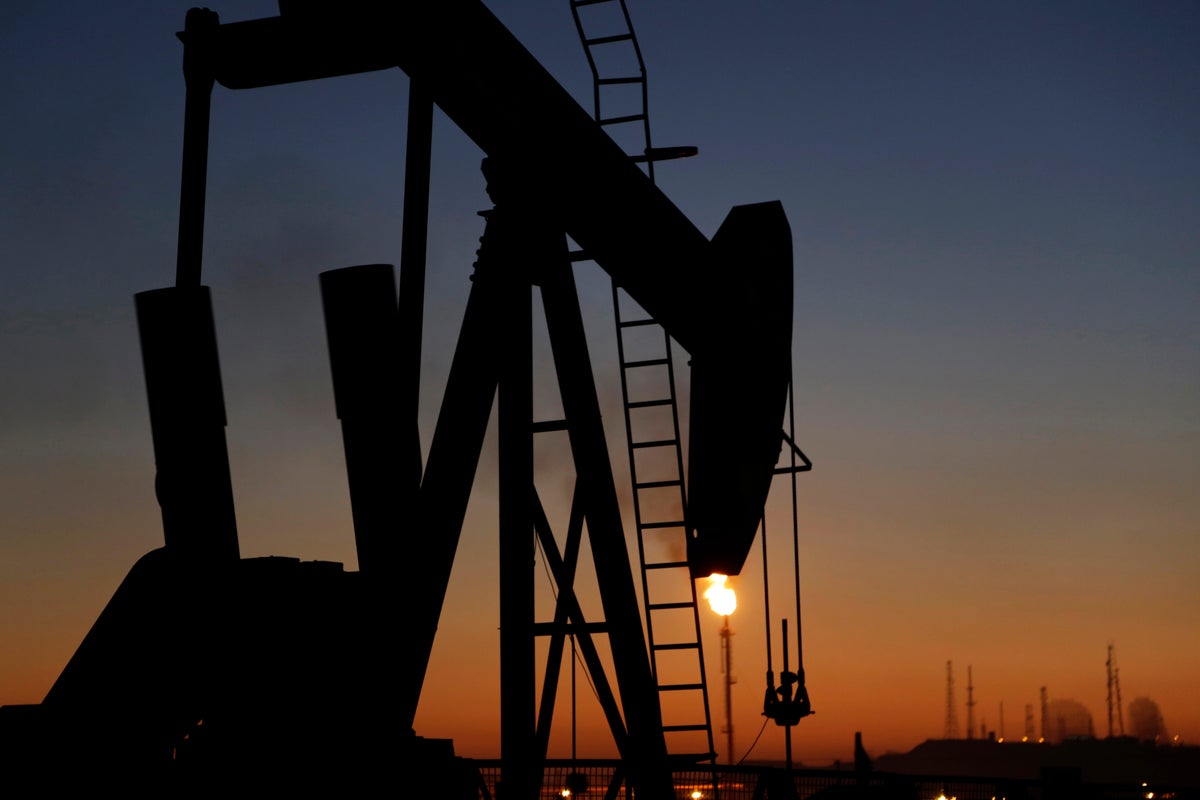
The authorization of the largest emergency oil release in history functions as a high-stakes liquidity injection into a physically constrained market, yet it creates a secondary risk profile that most analysts overlook: the depletion of geopolitical "buffer capital." When a conflict in the Middle East—specifically involving Iran—threatens the Strait of Hormuz, the market reacts not to the current shortage, but to the anticipated duration of a total supply severance. This intervention attempts to decoupled energy prices from war-risk premiums, but the structural mechanics of global supply chains suggest that such releases offer only a temporary reprieve against a permanent shift in the global energy equilibrium.
The Mechanics of Supply Elasticity and the Strait of Hormuz Bottleneck
To understand the scale of this emergency release, one must quantify the "Hormuz Risk." Approximately 21 million barrels of oil pass through the Strait of Hormuz daily. This represents roughly 21% of global liquid petroleum consumption. When a kinetic conflict breaks out, the market immediately prices in a "worst-case duration" scenario.
The primary failure in standard reporting is the assumption that a 180-million-barrel release (the typical scale of these massive interventions) can offset a total blockage. In reality, a total closure of the Strait would exhaust such a release in less than nine days. The strategic intent is therefore not to replace the lost volume, but to dampen the volatility of the "crack spread"—the difference between the price of crude oil and the petroleum products extracted from it—and to prevent a speculative feedback loop in the futures markets.
The Three Pillars of Emergency Mitigation Strategy
Governmental response to an energy crisis of this magnitude relies on three distinct operational levers. Each has a different decay rate and effectiveness profile.
- The Volume Lever (SPR Drawdown): This is the most visible tool. By increasing the immediate physical supply of sweet and sour crude, the government lowers the "spot" price. However, the SPR is a finite asset. Frequent use reduces the "deterrence value" of the reserve, as adversaries can calculate exactly how long a nation can sustain a war footing before facing economic collapse.
- The Logistics Lever (Jones Act Waivers): In the United States, shipping regulations often prevent foreign-flagged vessels from moving oil between domestic ports. During an Iran-related crisis, the suspension of these rules allows for a more fluid redistribution of existing stocks to high-demand areas like the Northeast or the Gulf Coast.
- The Demand Destruction Lever: This is the unspoken goal of high prices. When the government releases oil, it is trying to manage the rate of price increases so that demand destruction happens gradually rather than causing a systemic shock that breaks the transport and manufacturing sectors.
The Cost Function of Depletion
Every barrel released today is a barrel that cannot be used during a future, potentially more severe, escalation. We define the "Opportunity Cost of Security" ($C_s$) as the delta between the current acquisition price and the projected price during a peak-intensity conflict.
$$C_s = P_{future} - P_{current} + \text{Risk Premium}$$
This equation illustrates that if the SPR is depleted during a moderate crisis, the cost to refill it—or the cost of being without it during a total war—becomes exponentially higher. The current strategy assumes a "V-shaped" recovery of supply chains. If the Iran crisis transitions into a multi-year low-intensity conflict, the strategy of massive front-loaded releases will be viewed as a tactical error that traded long-term resilience for short-term political stability.
The Global Multiplier Effect on Refineries
Crude oil is not a monolithic commodity. The "Emergency Release" typically consists of specific grades (Sweet vs. Sour). Most global refinery infrastructure is calibrated for specific sulfur contents and API gravities.
- Refinery Mismatch: If the emergency release consists of light sweet crude while the disrupted Iranian supply was heavy sour, refineries face a "yield loss." They cannot produce the same volume of diesel and jet fuel from the replacement barrels.
- Throughput Constraints: Releasing oil from underground salt caverns requires significant electrical and hydraulic infrastructure. There is a physical limit to how many barrels per day (BPD) can be extracted, regardless of the total volume authorized for release.
- Inventory Lag: It takes 15 to 30 days for released SPR oil to reach a refinery, be processed, and enter the retail market as gasoline or diesel. This "latency period" means the economic relief of a release is always lagging behind the psychological panic of the market.
Geopolitical Game Theory and the Reserve
The decision to release oil is as much a psychological operation as it is an economic one. By flooding the market, the coordinating nations (usually via the International Energy Agency) are signaling to speculators that they are willing to "burn capital" to maintain price stability.
This creates a "Prisoner's Dilemma" for oil-producing nations like those in OPEC+. If the SPR release successfully drives prices down, OPEC+ may counter by further cutting their own production to maintain their revenue targets. This leads to a "War of Attrition" between strategic reserves and active production capacity. Historically, active production capacity wins this battle because it is a flow, whereas the SPR is a static stock.
The Infrastructure Bottleneck: Distribution vs. Volume
A critical oversight in the "Large-Scale Release" narrative is the physical state of the pipelines and maritime terminals. The U.S. Strategic Petroleum Reserve, for instance, was designed in an era when the U.S. was primarily an importer. Today, the U.S. is a major exporter.
The "Midstream Bottleneck" occurs when the pipelines used to move oil from the SPR to refineries are already at 90% capacity with domestic shale oil production. Adding 1 million barrels per day of "emergency" oil can over-pressurize the system or require the displacement of private-sector oil. This results in a "zero-sum" delivery where the emergency release simply replaces oil that would have been produced by private companies anyway, resulting in a net-zero impact on total global supply.
Measuring the Efficacy of the Intervention
To judge whether this "largest-ever" release is successful, one must look past the headline price of Brent or WTI crude. The real metrics of success are:
- The Term Structure: Is the market in "Backwardation" (future prices lower than current) or "Contango" (future prices higher than current)? A successful release should move the market toward contango, indicating that the immediate scarcity has been solved.
- Freight Rates: If the cost of chartering a VLCC (Very Large Crude Carrier) continues to spike, the oil release is failing to reach the global market due to logistics, not volume.
- Refinery Utilization Rates: If refineries are running at 95% capacity, they cannot process more oil regardless of how much the government releases. In this scenario, the release only builds "on-land" inventory without lowering the price of gas at the pump.
The Strategic Shift to Synthetic Reserves
The vulnerability exposed by the Iran crisis suggests that the "Salt Cavern" model of energy security is becoming obsolete. Advanced economies are beginning to shift toward "Digital and Synthetic Reserves."
- Virtual Reserves: Using financial derivatives and "call options" on global production to secure supply without physical storage.
- Electrification as a Buffer: The more a nation's transport fleet is electrified, the less a Strait of Hormuz closure impacts internal logistics. In this context, a massive investment in grid-scale batteries functions as a "Strategic Electron Reserve."
- Distributed Processing: Small-scale, modular refineries that can handle varying grades of crude reduce the "Refinery Mismatch" risk mentioned earlier.
The immediate authorization of the oil release acts as a firewall, but the heat of the Iran crisis is testing the structural integrity of that wall. The drawdown creates a period of "Artificial Stability." During this window, the primary objective of industrial and logistical leaders must not be to wait for lower prices, but to reconfigure supply chains to operate at a higher "Baseload Cost of Energy."
The move to release 180 million barrels is a signal of desperation disguised as a show of force. It confirms that the global spare capacity—the amount of oil that can be brought online within 30 days—is at dangerously low levels. When spare capacity is low, the market loses its ability to absorb "black swan" events.
Strategic planners should anticipate a secondary price spike once the release period ends. If the underlying geopolitical tension with Iran is not resolved, the market will realize the "safety net" has been removed, leading to a "refill premium" where prices rise specifically because the government must now compete with private buyers to buy back the oil it just sold.
The move is to hedge against the "Refill Phase." Organizations should lock in long-term supply contracts now, while the SPR release is artificially suppressing the spot price. The window of suppressed volatility is likely to last no more than 120 days. Beyond that, the physical reality of depleted reserves will meet the renewed demand of a global economy that has not yet transitioned away from its dependence on the 21% of oil flowing through a single, 21-mile-wide waterway.