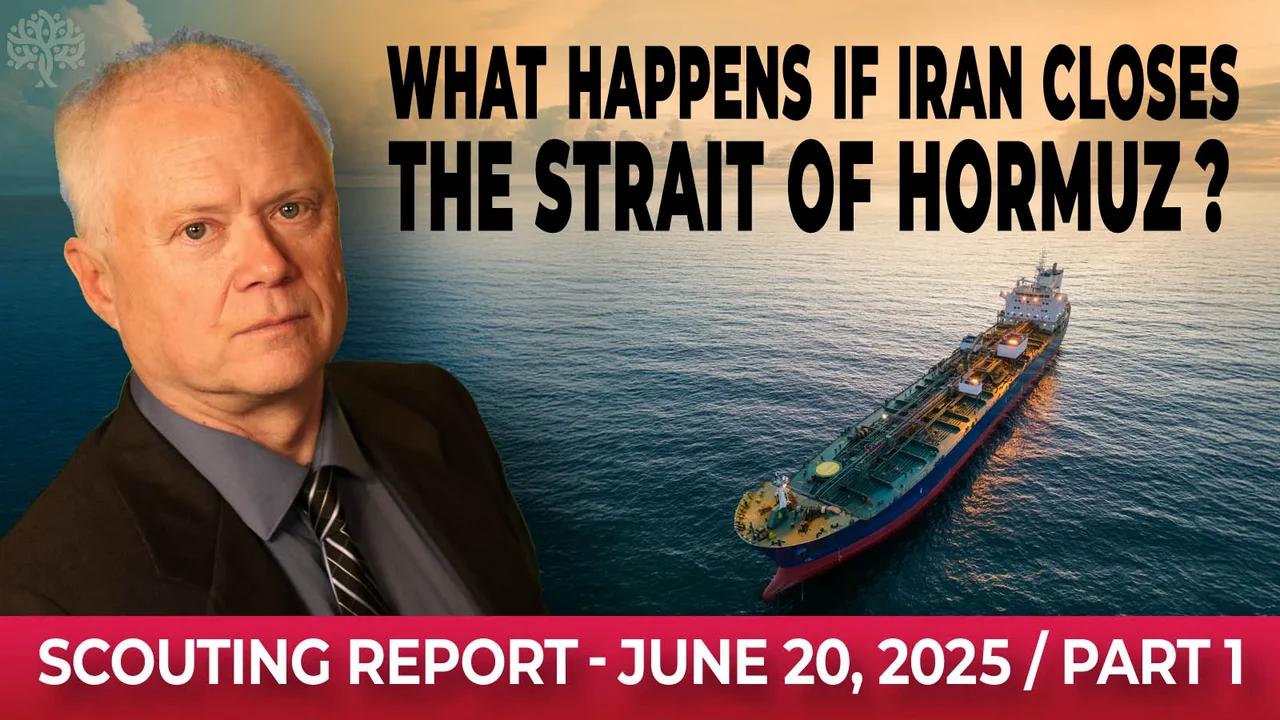
The headlines are screaming about a Tuesday deadline. Trump is rattling the saber, threatening to "hit" Iranian infrastructure if the Strait of Hormuz remains blocked. The markets are twitching. The pundits are dusting off their maps of the Persian Gulf.
They are all missing the point. Meanwhile, you can read other events here: The Calculated Silence Behind the June Strikes on Iran.
The obsession with the physical blockage of the Strait is a 1970s solution to a 2020s reality. We are witnessing a theatrical performance designed to mask a fundamental shift in energy dominance and kinetic warfare. If you think this is about tankers getting stuck in a narrow channel, you’ve been played by the legacy media’s thirst for a "Tanker War" sequel.
The Myth of the Unbreakable Choke Point
The standard narrative suggests that if Iran sinks a few VLCCs (Very Large Crude Carriers) in the shipping lanes, the global economy collapses. This assumes the world is static. It ignores the reality of the East-West Pipeline in Saudi Arabia and the Habshan–Fujairah pipeline in the UAE. To explore the full picture, check out the excellent analysis by The Washington Post.
Geography is not destiny when you have enough steel and concrete.
While the Strait handles roughly 20% of the world's petroleum liquids, the actual "choke" is psychological. Closing the Strait is a suicidal move for Tehran. It is their only lung. You do not win a fight by cutting your own throat to spray blood on your opponent. Iran’s economy is already on life support; a total maritime shutdown kills the patient before the doctor even arrives.
The threat of hitting "infrastructure" is not a response to a blockage. It is an admission that the physical blockade is a secondary concern. The real war is being fought in the refineries and the digital architecture of the power grid.
Why the Tuesday Deadline is a Red Herring
Politics runs on deadlines. War runs on logistics. Trump’s Tuesday ultimatum is a masterpiece of market manipulation and diplomatic pressure, but it lacks tactical teeth in the way the press imagines.
Military operations of this scale do not wait for a calendar flip. They are already in motion. The "threat" is the weapon itself. By setting a hard date, the administration forces Beijing to pick up the phone. China is the primary customer for Iranian crude. By threatening the infrastructure that feeds China’s energy needs, the U.S. is not talking to the Ayatollah; it is talking to Xi Jinping.
The "lazy consensus" says we are on the verge of World War III. The reality? We are in a high-stakes commodities negotiation.
The Energy Independence Lie
You will hear talking heads claim the U.S. is "energy independent" and therefore immune to a Hormuz crisis. This is a dangerous half-truth.
The U.S. produces more crude than any nation in history, yes. But we don't consume what we produce. Our refineries are geared for heavy sour crude from abroad, while we pump light sweet crude that we export. We are tethered to the global price index. If the Strait closes, the price of a gallon in Ohio goes up because the global price goes up, regardless of how much oil is sitting under Texas.
The "nuance" the competitor missed is that military action in the Gulf isn't about "protecting our oil." It's about protecting the Petrodollar. If the flow stops, the currency becomes the casualty.
Targeting Infrastructure: The New Kinetic Reality
When a President mentions "infrastructure," he isn't talking about piers and docks. He’s talking about:
- Gas-to-Liquids (GTL) plants.
- The South Pars gas field processing hubs.
- The power conversion stations for the domestic grid.
Hitting these doesn't just stop exports; it creates internal civil unrest. It turns the Iranian population against a regime that can't keep the lights on or the water running.
However, there is a massive downside the hawks won't admit. Iran has spent decades perfecting "asymmetric" responses. They don't need to win a naval battle. They just need to make insurance rates for shipping so high that it becomes economically impossible to transit the region. You don't need to sink a ship to stop trade; you just need to make the cost of the ship's insurance exceed the value of the cargo.
Dismantling the "People Also Ask" Nonsense
"Will gas prices double on Wednesday?" No. Speculation is already baked into the current price. The "threat" is the peak. The actual strike often leads to a "sell the news" event where prices stabilize because the uncertainty is gone.
"Can the U.S. Navy keep the Strait open?" Physically? Yes. Operationally? It’s a nightmare. Clearing mines takes weeks, not hours. The U.S. has neglected its minesweeping capabilities for decades, favoring carrier groups that are essentially "sitting ducks" in the narrow confines of the Gulf.
"Is this about regime change?" It’s about regime behavior. The U.S. doesn't want to govern Iran. It wants Iran to stop undercutting the regional security architecture that keeps the oil flowing to our "frenemies" in the East.
The Hard Truth About Maritime Security
I have seen planners at the highest levels agonize over "proportionality." The competitor's article treats a strike on infrastructure as a simple A-to-B equation. It isn't.
If you hit Iranian terminals, they hit Saudi desalination plants.
You stop their oil; they stop the region's water.
This is the "Mutual Assured Destruction" of the 21st century. It isn't nuclear; it's industrial. The U.S. threat to hit infrastructure is a gamble that the Iranian regime fears its own people more than it fears American Tomahawks. It’s a bet on internal collapse.
Stop Watching the Ships, Watch the Data
The real disruption isn't happening in the water. It's happening in the insurance offices in London and the commodity desks in Singapore.
The "Tuesday threat" is a signal to the markets to price in a post-Iranian energy world. It is a forced decoupling. By making the Strait "un-insurable," the U.S. is effectively closing it without firing a single shot, forcing the world to find alternatives that don't involve Tehran.
The competitor's article thinks we are waiting for a war. They are wrong.
The war is already over, and the outcome was decided the moment we realized that "security" is just another word for "supply chain dominance."
Move your capital. Hedge your risk. The deadline isn't about a strike; it's about the end of the Gulf's monopoly on global anxiety.
Stop asking if the ships will move. Ask who profits when they stay still.