In a small, windowless room in Pasadena, a scientist named Sarah stares at a smudge. It is a grainy, ochre-tinted photograph sent across 140 million miles of vacuum. To anyone else, it’s a rock. To the internet, it’s a lizard.
She knows what will happen within the hour. Someone on a forum will circle that shadow in neon green. They will claim the Curiosity rover has finally stumbled upon a Martian iguana basking in the cold, radioactive sun. They will point to the "eye," the "scaly tail," and the "stilled breath" of a creature that exists only in the desperate architecture of the human brain. Sarah feels a familiar pang of exhaustion. It isn't just about the science anymore. It’s about the crushing weight of our own loneliness as a species.
We are terrified of being alone in the basement of the universe. That fear manifests as a persistent, collective hallucination: we see insects in the dust and reptiles in the ridges of ancient craters.
The Architect of the Lie
The human mind is a pattern-matching engine that never sleeps. We call it pareidolia. It is the same evolutionary quirk that makes you see a weeping face in a piece of burnt toast or a predator in the rustle of a curtain. Thousands of years ago, the guy who thought a bush was a lion lived to have kids. The guy who thought the lion was just a bush did not. We are the descendants of the paranoid.
On Mars, this survival mechanism backfires.
When we look at the Martian surface through the eyes of a multi-billion-dollar robot, we aren't looking for minerals or atmospheric isotopes. Not really. We are looking for a neighbor. When the light hits a jagged piece of volcanic basalt at 4:00 PM local Martian time, the shadows stretch. They mimic the articulated joints of a beetle or the low-slung belly of a monitor lizard.
Consider the "Martian Spider." Every spring, the south polar ice cap of Mars begins to sublimate. Carbon dioxide gas trapped under the ice builds pressure until it erupts, spraying dark dust into the air. This dust falls back down in spindly, radial patterns that look hauntingly like giant arachnids crawling across the dunes. If you saw it through a telescope in 1920, you might have reached for your shotgun.
But there is no silk. No venom. No heartbeat. Just the violent, cold transition of gas in a vacuum.
The Biological Wall
If we want to understand why there aren't any lizards scuttling through Gale Crater, we have to talk about the "Viking Hangover."
In 1976, the Viking landers touched down with the explicit goal of finding life. They performed experiments that, at first glance, seemed to scream "Yes!" One instrument detected a burst of oxygen when Martian soil was mixed with nutrients. The world held its breath. For a few glorious weeks, we lived in a universe where the Red Planet was breathing.
Then the data cooled.
Scientists realized the "breath" wasn't biological. It was a chemical reaction. The soil on Mars is saturated with perchlorates—salts that are essentially toxic bleach. When you drop "food" onto bleach, things happen. Violent things. But they aren't alive. This was the moment our cosmic optimism hit a concrete wall.
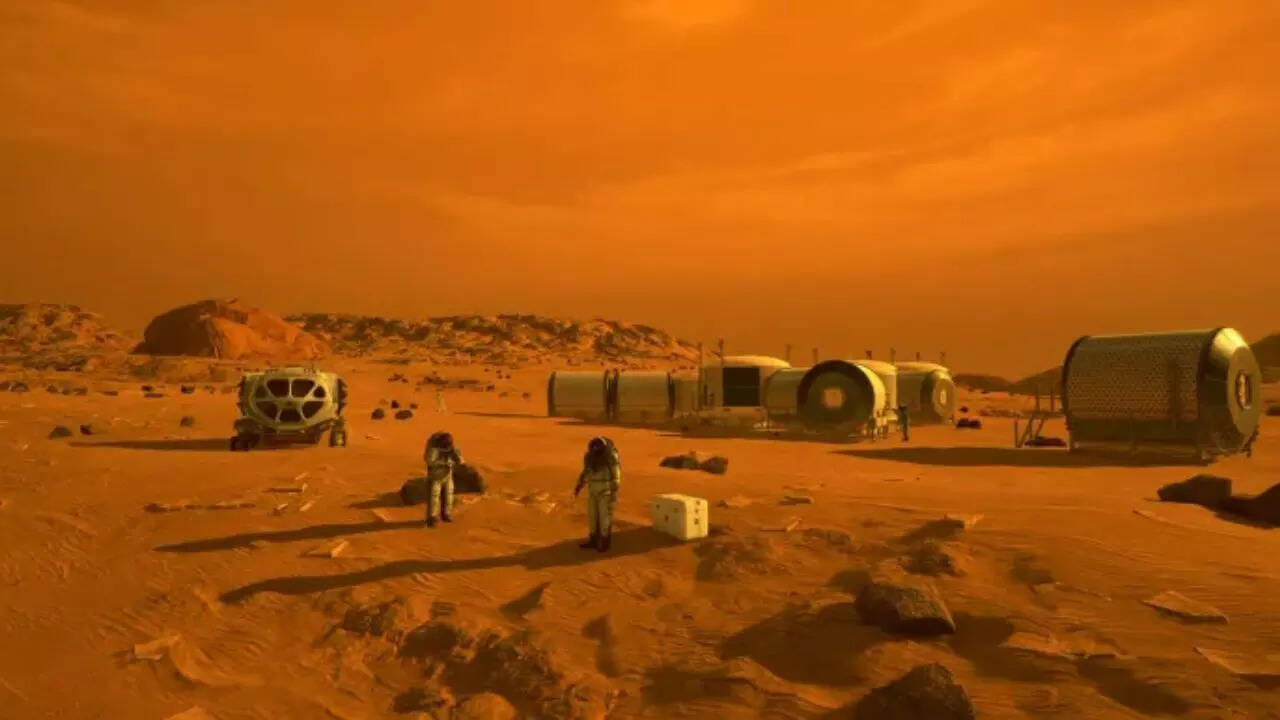
Mars is not just a desert. It is a sterilized, frozen, irradiated hellscape. A lizard—any reptile, really—is an ectotherm. It needs external heat to function. On a warm summer day at the Martian equator, the temperature might climb to a balmy 20°C. But by sunset, it plummets to -70°C. A lizard would not just go to sleep; its cells would crystallize. It would shatter like glass.
Then there is the air. Or the lack of it.
The Martian atmosphere is 1% as thick as Earth’s. It is almost entirely carbon dioxide. To a complex organism like an insect or a reptile, being on Mars would feel like being at the top of Mount Everest, multiplied by ten, while standing inside a microwave. The UV radiation from the sun, unfiltered by a thick ozone layer, shreds DNA on contact.
The Secret Life of Small Things
But what about the bugs?
Insects are the ultimate survivors on Earth. They endure the vacuum of high-altitude flight and the crushing depths of soil. However, an insect still requires an ecosystem. A beetle needs something to eat—a leaf, a piece of dung, another bug. On Mars, there is no primary producer. There is no grass. There is no moss. There is only the regolith, a fine, sharp dust made of crushed rock and toxic salts.
If a grasshopper were magically transported to the Martian plains, it wouldn't find a world to conquer. It would find a vacuum that sucks the moisture out of its spiracles in seconds.
Yet, the rumors persist.
In 2019, a professor emeritus from Ohio University presented a paper claiming he saw "insect-like and reptile-like photos" in the NASA archives. He pointed to "carapaces" and "legs." The scientific community reacted with a mixture of pity and frustration. It was the "Face on Mars" all over again—a trick of light and low resolution that evaporated the moment a better camera arrived.
We want the bugs to be there because the alternative is a silence so profound it hurts.
The Real Stakes
The tragedy of the "Martian Lizard" is that it distracts us from the miracle that might actually be there.
While the internet hunts for ghost shadows, Sarah and her team are looking for something much smaller, much quieter, and infinitely more profound. They are looking for the chemical fingerprints of microbes that might have lived three billion years ago when Mars had blue water and a thick, protective blanket of air.
Finding a fossilized bacterium wouldn't make for a viral YouTube thumbnail. It doesn't have "eyes." It doesn't look like a pet. But it would change the trajectory of human history. It would mean that life is not a fluke. It would mean that the universe is a garden, even if most of it is currently in winter.
When we insist on seeing lizards, we are essentially saying that the universe isn't interesting enough unless it looks exactly like our backyard. We are projecting our biology onto a world that has its own, much harsher, much more alien story to tell.
The Ghost in the Machine
Late at night, the rovers continue their lonely crawl. Curiosity and Perseverance don't see monsters. They see mineral veins. They see "blueberries" made of hematite. They see the slow, grinding history of a planet that tried to be like Earth and failed.
Every time a "lizard" is debunked, there is a collective sigh of disappointment. We want the thrill of the encounter. We want the "War of the Worlds." We want to know that if we ever travel across that black ocean, there will be something there to greet us, even if it’s just a snake in the dust.
But the truth is more haunting.
If there is life on Mars, it is likely hiding. It is deep underground, huddling in the damp crevices of salt deposits, shielded from the radiation, vibrating at a frequency so slow we can barely measure it. It isn't a reptile. It isn't an insect. It is a survivor of a planetary apocalypse, clinging to the wreckage of a lost world.
Sarah turns off her monitor. The smudge is still there, a trick of the afternoon sun hitting a piece of sedimentary rock. For a second, she lets herself see it. She lets herself imagine the scuttle of legs on the sand. Then she remembers the perchlorates, the vacuum, and the cold.
She sighs and logs the rock for what it is: a silent witness to a dead world.
The lizard isn't on Mars. The lizard is in us. It is the primitive part of our brain that refuses to accept a vacant lot. We will keep searching the shadows, keep enhancing the grain, and keep dreaming of monsters until the day we finally step onto those red sands ourselves and realize the only heartbeats on the planet are the ones we brought with us.
Would you like me to help you draft a research proposal or a script exploring the chemical signatures scientists actually look for when searching for life on Mars?