The discovery of a weighted body off a Hong Kong pier provides a clinical look at the logistical constraints of illicit body disposal in a high-density, surveilled maritime environment. While sensationalist reporting focuses on the macabre, a strategic analysis reveals a specific operational profile characterized by high risk, physical labor requirements, and a fundamental misunderstanding of aquatic buoyancy physics. The recovery of a male victim tied to bags of bricks near a public pier is not merely a "suspicious case"; it is a failed attempt at long-term concealment that provides actionable data on local criminal tradecraft.
The Triad of Concealment Failure
For a disposal operation to succeed in a maritime context, three variables must be balanced: Inaccessibility, Negative Buoyancy, and Current Trajectory. In this instance, the failure of all three suggests a rushed or technically deficient execution.
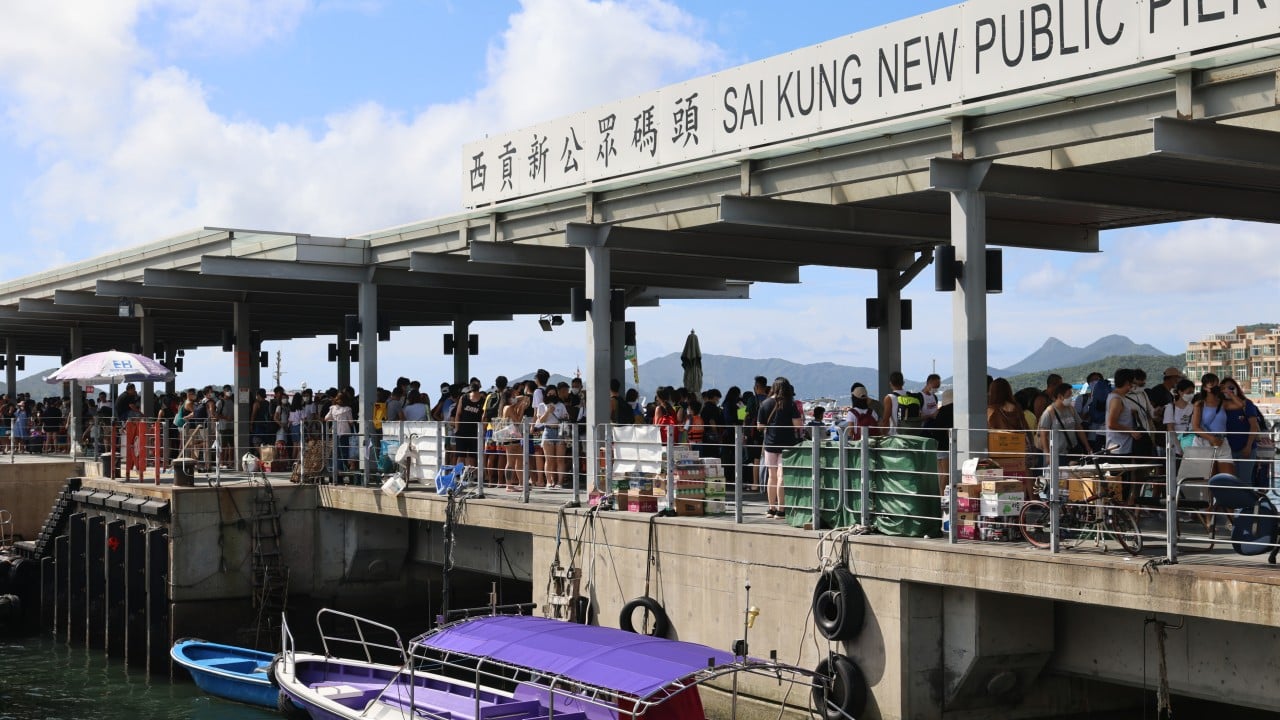
- Inaccessibility Failure: Utilizing a pier—a point of high human traffic and frequent vessel docking—ensures that the site remains under periodic visual inspection. Unlike deep-sea disposal requiring vessel access, pier-side disposal is a "shore-to-water" transition. This minimizes the perpetrator's need for a boat but maximizes the proximity to witnesses and security infrastructure.
- Negative Buoyancy Miscalculation: The use of bricks as a weighting mechanism is a common but frequently ineffective tactic. Human remains undergo significant volume changes due to post-mortem gas accumulation. If the ballast (the bricks) is not securely integrated into the body's center of gravity or does not exceed the displaced volume’s lift, the object eventually achieves neutral buoyancy and rises or moves with the tide.
- Current Trajectory: Hong Kong’s coastal waters are subject to complex tidal flows. A body dropped near a pier is rarely "lost" to the deep; it is instead trapped in the eddy currents created by the pier’s pilings or pushed back toward the shoreline by incoming tides.
The Physics of Forensic Ballast
To understand why the "bags of bricks" method failed, one must examine the $Density$ vs. $Displacement$ ratio.
The average density of a human body is approximately $1010 kg/m^3$ to $1060 kg/m^3$, which is remarkably close to the density of seawater ($1025 kg/m^3$). As decomposition progresses, the production of methane, hydrogen sulfide, and carbon dioxide within the abdominal cavity decreases the overall density of the remains.
The weight required to keep a body submerged is not a static figure; it is a dynamic requirement that must account for:
- The initial mass of the remains.
- The volume of gas generated (up to 15-20 liters in temperate waters).
- The surface area of the weights. Bricks are a poor choice for ballast because of their low density-to-volume ratio compared to lead or specialized anchors. Furthermore, if the bags used to hold the bricks are made of degradable or high-friction material (like plastic or burlap), they are prone to tearing against the seabed or the pier’s barnacle-encrusted pilings. The moment a bag shears off, the body loses its negative buoyancy and becomes a surface-level navigational hazard, leading to inevitable discovery.
Forensic Indicators and Victim Identification
The condition of the remains at the time of discovery dictates the timeline of the investigation. In the Hong Kong case, the degree of bloating and skin slippage provides a "biological clock" for the immersion period.
- Saponification (Adipocere formation): If the body has been submerged in an anaerobic, cold, or moist environment, the fatty tissues may have begun to turn into a waxy substance. This preserves certain features but complicates the estimation of the time of death.
- Mechanical Injuries vs. Post-Mortem Damage: Investigators must distinguish between injuries sustained during the "suspicious" event and damage caused by maritime traffic (propellers) or scavengers. The specific method of binding—how the bricks were attached—serves as a behavioral "signature" of the perpetrator.
The absence of identification on the victim suggests a deliberate attempt to sever the link between the body and its social identity. However, in a jurisdiction like Hong Kong, biometric databases, dental records, and missing persons reports create a narrow window for anonymity. The investigative priority shifts from the where (the pier) to the who (the victim’s last known movements) via CCTV triangulation.
Surveillance Logistics and the Pier Environment
Public piers in Hong Kong are high-surveillance nodes. The logistical challenge for a perpetrator is the transit of heavy ballast and remains to the water's edge.
- Vehicle Access: Most piers require a vehicle to transport the weight involved (body plus bricks). This leaves a digital footprint via Electronic Toll Collection (ETC) systems and license plate recognition cameras.
- Physical Exertion: A single adult male body plus 40–60kg of bricks is an unwieldy load. Moving this from a vehicle to the pier’s edge requires either multiple people or a significant amount of time, increasing the probability of being captured on low-light surveillance or spotted by night-shift workers.
The choice of a pier suggests a lack of maritime assets. If the perpetrators had access to a junk boat or a speedboat, the disposal would likely have occurred in the deeper channels toward the South China Sea, where depths exceed 30 meters and currents are stronger. Pier-side disposal is a hallmark of "terrestrial thinking" applied to a maritime environment—a tactical mismatch that favors the police.
The Bottleneck of Evidence Recovery
The recovery of the bags of bricks is as critical as the recovery of the body. Forensic analysts will examine the bricks for:
- Batch Numbers or Manufacturers: Common construction materials can often be traced to specific sites or retail outlets.
- Biological Material: Hair, skin cells, or clothing fibers trapped between the weight and the body.
- Knot Analysis: The technique used to secure the weights. Specialized knots suggest a maritime or construction background; "granny knots" or zip ties suggest an amateur or improvised approach.
The primary bottleneck in these cases is the degradation of DNA in seawater. High salinity and microbial activity accelerate the breakdown of nuclear DNA. However, mitochondrial DNA often remains viable in the teeth and dense bone (petrous bone), allowing for identification even after significant immersion.
Strategic Investigative Forecast
The investigation will likely pivot from the pier to a 5-kilometer radius of industrial or construction sites where the specific type of brick and bagging material is readily available. The "suspicious" nature of the case will be confirmed through a toxicology screen and a lung-water analysis. If the victim’s lungs contain seawater, the cause of death is drowning (implying the victim was alive when weighted). If no seawater is present, the disposal was post-mortem, pointing toward a homicide or an organized crime "cleansing."
Law enforcement will utilize "reverse geofencing" to identify mobile devices that were active at the pier during the estimated window of disposal. Given the weight of the objects involved, the suspect pool is limited to individuals with the physical capability or the vehicle access to transport over 100kg of mass to a public waterfront.
The most likely outcome is the identification of the victim within 72 hours via fingerprinting or dental records, followed by a search for the "disposal vehicle" identified through the city’s comprehensive CCTV grid. The use of bricks, while heavy, provided the very evidence needed to anchor the investigation to a specific geographic and industrial origin.
The immediate tactical requirement for authorities is the expansion of the dive perimeter to locate any discarded clothing or personal effects that may have detached during the buoyancy shift. The recovery of the binding material is the highest priority for linking the crime scene to a secondary location (the kill site or the loading site). Success in this case will not come from the body alone, but from the industrial forensics of the ballast used to sink it.