The rhythm of a city is dictated by the hum of its engines. In Dhaka, that hum is a frantic, beautiful cacophony of rickshaw bells, construction grinders, and the steady thrum of diesel generators that keep the garment factories breathing. But in the weeks leading up to Eid-ul-Fitr, that rhythm faltered. The hum turned into a stutter.
Fuel is the silent protagonist of every holiday story. We talk about the food, the new clothes, and the journey home, but none of it moves without the heavy, oily scent of diesel. When the tanks run low, the stakes aren't just economic. They are deeply, painfully personal.
Consider a shopkeeper in a busy market. Let’s call him Rafiq. For Rafiq, Eid isn't just a religious milestone; it is the fiscal anchor for his entire year. He stocks his shelves with silk and cotton, betting his family’s security on the surge of shoppers in the final ten days of Ramadan. But without fuel, the lights in his shop flicker and die. Without fuel, the trucks carrying his last-minute inventory sit idle on the highway. Without fuel, the very buses his customers use to reach him stop running.
This was the shadow hanging over Bangladesh as the festival approached. The country was staring at a deficit, a gap in the supply chain that threatened to turn the brightest week of the year into a season of forced darkness.
The Anatomy of a Shortage
National borders are often described as walls, but when it comes to energy, they function more like valves. Bangladesh’s energy appetite has outpaced its domestic infrastructure. The country consumes vast amounts of high-speed diesel to power its irrigation pumps, its transport sector, and its industrial backbone.
When global markets tighten, a nation’s strategic reserves become its pulse. If that pulse weakens, the panic starts at the edges—the rural farmers who need pumps to save their crops—and moves inward to the urban centers. The government was looking at a shortfall that could have crippled the holiday exodus, the massive migration of millions of people leaving the capital to visit their ancestral villages.
Then, the valve opened.
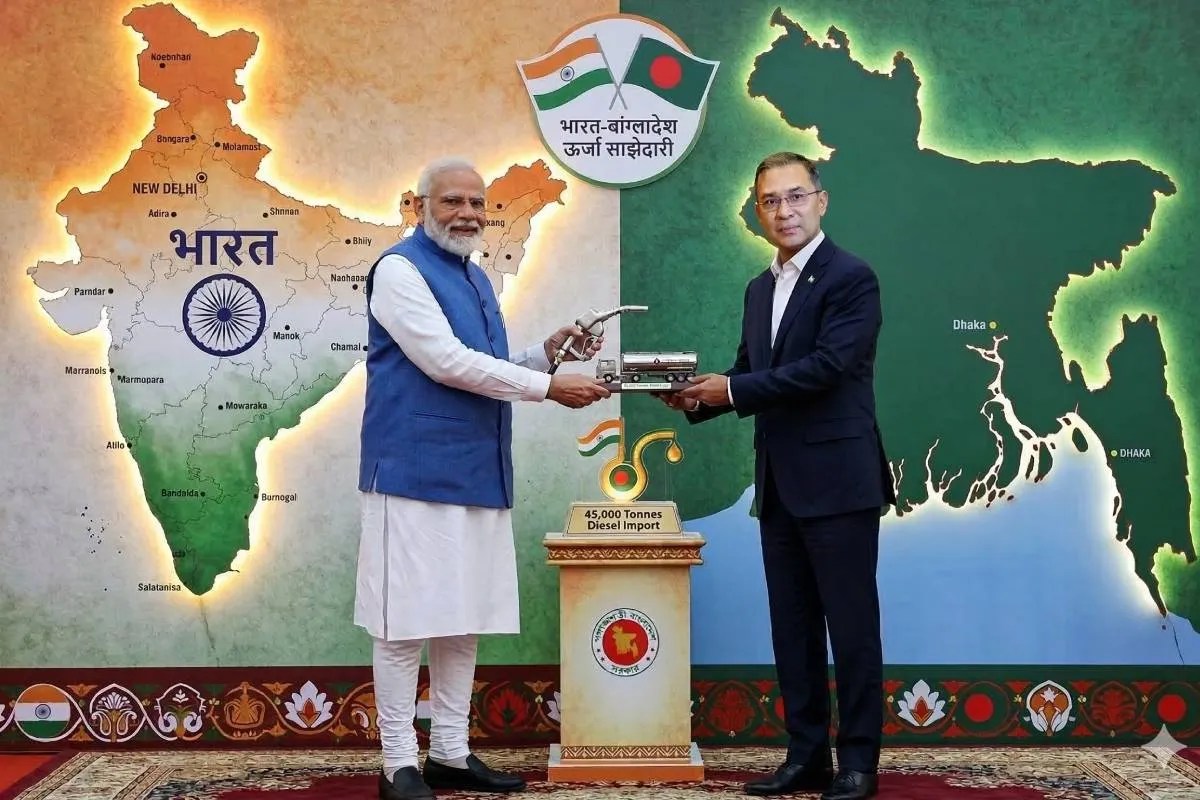
India and Bangladesh have spent years weaving a complex web of energy diplomacy. It isn't always smooth, and it is rarely simple, but in moments of crisis, the proximity of the two nations becomes a lifeline. The decision was made to move 45,000 metric tonnes of diesel across the border.
45,000 Tonnes of Certainty
Numbers that large often lose their meaning. We hear "45,000 tonnes" and think of spreadsheets and port logs. To understand the scale, you have to look at the logistics. This wasn't a single shipment; it was a coordinated surge of rolling stock.
Imagine the rail tankers.
The Friendship Pipeline and the rail corridors between the two countries are the physical manifestations of a political handshake. Each wagon in those long, heavy trains carries enough fuel to power a small town’s transport for days. When the first of the roughly 18 to 20 rakes began their journey, they weren't just carrying a commodity. They were carrying the assurance that the Eid commute wouldn't collapse.
This specific deal involved the Numaligarh Refinery in Assam and the Bangladesh Petroleum Corporation. It is a transactional relationship, yes, but the timing changed the nature of the trade. By ensuring the delivery arrived before the peak of the festival, the pressure on the Bangladeshi market evaporated almost overnight.
The panic buying stopped. The black-market prices that usually spike during a shortage retreated.
The Hidden Geometry of the Border
The flow of energy between India and Bangladesh is shifting from emergency interventions to a permanent state of connectivity. For years, the two nations relied on slow, expensive maritime routes—ships navigating the Bay of Bengal, waiting for berths at Chittagong or Mongla, and then offloading into smaller vessels. It was a process prone to weather delays and bureaucratic bottlenecks.
The shift toward rail and pipelines represents a fundamental change in how South Asia functions. By using the land route from West Bengal and Assam directly into the heart of Bangladesh’s distribution network, the "delivery time" is cut from weeks to days.
During this pre-Eid crunch, that speed was the only thing that mattered.
But there is a cost to this reliance that often goes unmentioned in the celebratory press releases. For Bangladesh, importing fuel is a drain on foreign exchange reserves. Every tonne of diesel bought in dollars is a tonne of pressure on the Taka. The "fuel crisis" was solved, but it was solved by leaning on a neighbor, highlighting the delicate balance of being a growing economy with a thirsty engine and a limited straw.
The Human Toll of an Empty Tank
If the fuel hadn't arrived, the story of this Eid would have been told in missed connections.
We forget that for many workers in the garment districts of Gazipur and Narayanganj, Eid-ul-Fitr is the only time in the year they see their parents or children. They save for months to buy a ticket on a crowded bus or a ferry. If diesel prices had tripled due to a shortage, those tickets would have become luxuries.
Families would have been fractured by the simple lack of a combustible liquid.
Instead, the arrival of the Indian diesel acted as a stabilizer. It allowed the transport owners to keep their fleets running. It allowed the power plants to maintain a semblance of a schedule, ensuring that the tailors working through the night to finish Eid outfits had the light they needed to see their needles.
It is easy to get lost in the geopolitics—the "India-Bangladesh friendship," the "regional cooperation," the "strategic partnership." Those phrases are the polished veneer on a much grittier reality. The reality is a train driver in Siliguri checking his gauges at 3:00 AM, and a dockworker in Parvatipur watching the heavy hoses connect to the storage tanks.
The Engine Never Sleeps
The 45,000 tonnes are now being burned. They are disappearing into the exhaust pipes of thousands of buses and the cylinders of industrial generators. By the time the last prayer of Eid is said, much of that fuel will be gone, converted into movement and light.
But the precedent remains.
This wasn't just a sale; it was a demonstration of a new kind of regional elasticity. The ability to pivot and move massive amounts of energy across a border in response to a cultural deadline is a sophisticated feat of engineering and diplomacy. It suggests that the borders in South Asia are becoming more porous for the things that matter—power, heat, and the means to get home.
As the sun sets over Dhaka, the city doesn't go dark. The street vendors under their bright bulbs are still shouting. The buses are still pushing through the humid air, loaded with families and luggage. The hum is steady. The rhythm is unbroken.
Somewhere in a small village, a daughter is hugging her father because a bus had the fuel to make the trip. That is the real ledger of the deal. The rest is just math.