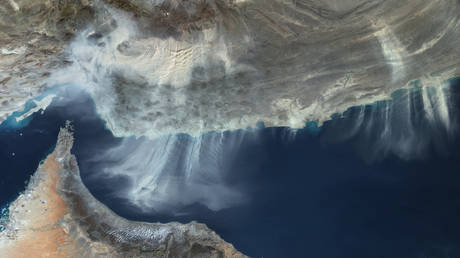
The Strait of Hormuz is not a "team effort" in any traditional sense. It is a choke point where the world’s reliance on fossil fuels meets the harsh reality of American isolationism. For decades, the United States Navy has functioned as the world's unpaid security guard, ensuring that roughly 20 percent of the world’s liquid petroleum gas and oil flows through a narrow 21-mile wide corridor without being seized or sabotaged. When the White House signals that this era is over, it isn't just a request for help. It is an admission that the post-World War II maritime order is collapsing.
The burden of securing this waterway has fallen on a handful of nations while the primary beneficiaries—China, Japan, and South Korea—have historically watched from the sidelines. These nations rely on the Strait for the vast majority of their energy needs. Yet, they have spent the last forty years under a security umbrella funded by American taxpayers. The shift toward a "team effort" is less about diplomacy and more about a fundamental restructuring of global energy costs. If the U.S. stops footing the bill, the price of every barrel of oil will soon reflect the cost of the destroyers required to escort it.
The Economic Ghost in the Machine
Most discussions about the Strait of Hormuz focus on naval maneuvers and missile batteries. This misses the real engine of the crisis: insurance premiums. Global shipping is built on the assumption of safe passage. The moment that assumption vanishes, the "War Risk" surcharges applied by Lloyd’s of London and other insurers skyrocket. We saw this in the "Tanker War" of the 1980s and again during the recent spate of seizures and drone attacks.
When a superpower suggests that other nations should protect their own tankers, they are effectively telling the market that the U.S. will no longer subsidize the risk of global trade. For a country like China, which imports nearly 10 million barrels of oil per day, a significant portion of which passes through Hormuz, this is a strategic nightmare. They lack the blue-water navy capacity to maintain a permanent, high-intensity presence in the Persian Gulf. They have the ships, but they don't have the logistics or the regional bases to sustain them.
This creates a vacuum. In the world of international trade, vacuums are rarely filled by "teams." They are filled by the highest bidder or the most aggressive actor.
The Logistics of a Naval Shakedown
To understand why a "team effort" is so difficult to coordinate, one must look at the technical requirements of patrolling the Strait. It is not enough to simply sail a boat through the water. Effective deterrence in the Strait of Hormuz requires a sophisticated integrated defense network.
- Mine Countermeasures: The Iranian Navy has perfected the art of "asymmetric" naval warfare, specifically the use of sophisticated sea mines that can be deployed by civilian-looking dhows.
- Aegis-level Air Defense: Protecting a slow-moving VLCC (Very Large Crude Carrier) from swarms of fast-attack craft and anti-ship cruise missiles requires high-end sensors and rapid-response capabilities.
- Intelligence and Reconnaissance: You cannot protect what you cannot see. Constant drone and satellite surveillance is a prerequisite for preventing "silent" boardings in the dark.
Very few nations possess all three of these capabilities. The UK’s Royal Navy is overstretched. The French have a base in the UAE but limited hull numbers. India is wary of picking a side and losing its strategic autonomy. This leaves the "team" looking more like a collection of reluctant observers than a cohesive fighting force.
The China Dilemma
China is the elephant in the room. They are the primary customer for the oil passing through the Strait, yet they have remained militarily invisible in the region’s security architecture. By demanding a "team effort," the U.S. is effectively trying to force China to pay for the security of its own energy supply.
It sounds logical on paper. If you buy the groceries, you should pay for the delivery. However, inviting a rival superpower to patrol the world’s most sensitive energy corridor is a dangerous game. If the People's Liberation Army Navy (PLAN) establishes a permanent, dominant presence in the Strait of Hormuz to "protect their tankers," the U.S. loses its most significant lever of influence over the global economy.
We are witnessing a pivot where the U.S. is weighing the cost of being the world's policeman against the risk of its rivals taking the badge. The "team effort" rhetoric is a soft way of saying the U.S. is ready to walk off the job if the pay doesn't improve.
Why Regional Alliances Fail
There is a persistent fantasy that the Gulf Cooperation Council (GCC) states—Saudi Arabia, the UAE, Qatar, and others—could simply form their own "Arab NATO" to secure the Strait. This ignores the deep-seated political divisions within the region. Qatar has a different relationship with Iran than Saudi Arabia does. Oman, which shares the Strait with Iran, maintains a policy of strict neutrality to avoid being crushed between its larger neighbors.
Furthermore, the hardware doesn't match the mission. While the Saudis have spent billions on high-end American fighter jets and tanks, their navy is largely designed for coastal defense, not for the high-stakes escort missions required to keep the Strait open during a hot conflict.
The Private Security Alternative
If the "team" of nations fails to materialize, the industry will likely turn to the private sector. We are already seeing the emergence of "floating armories" and private maritime security companies (PMSCs) taking a larger role in the Red Sea and the Gulf of Aden. However, there is a massive difference between putting four guys with rifles on a deck to deter Somali pirates and defending a tanker against a sovereign military using state-of-the-art missiles.
Private security cannot replace a carrier strike group. It can only provide a false sense of security that evaporates the moment a real kinetic engagement begins.
The Inevitability of High Energy Costs
Ultimately, the call for a "team effort" is a signal to the global markets that the era of cheap, guaranteed transit is over. Whether the "team" forms or the U.S. continues its slow withdrawal, the result is the same: higher costs.
Shipping companies will have to pay for their own escorts. Insurers will keep rates at "conflict" levels. Nations will be forced to spend billions on naval procurement that they previously allocated to social programs or infrastructure. The "security tax" on oil is no longer being paid by the U.S. military budget; it is being passed directly to the consumer at the pump.
This isn't a temporary spike. It is a structural realignment of how the world moves energy. The Strait of Hormuz has become a mirror reflecting the fragmented nature of the new century. If you want the oil, you must be prepared to fight for it, or at the very least, pay the person who does.
The next time a tanker is seized or a mine is detected, don't look to Washington for a unilateral response. Look at the flag on the ship and ask why that nation isn't there to protect it. That is the new rule of the sea.
Check the registration of the next tanker entering the Strait; that flag tells you exactly who is now responsible for its survival.