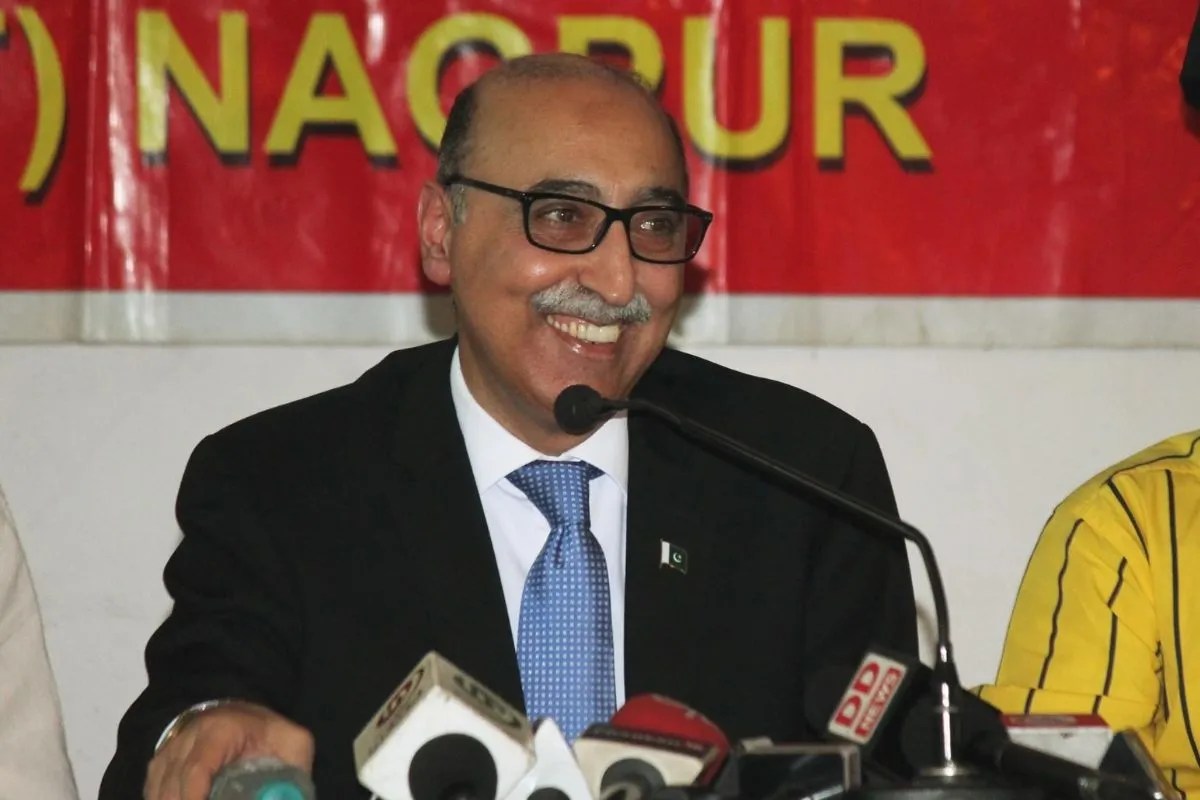
The internet is currently hyperventilating over a viral clip of former Pakistani diplomat Abdul Basit suggesting that if the U.S. strikes Pakistan, Islamabad should retaliate by hitting New Delhi and Mumbai. The headlines are predictable. They scream about "provocative statements" and "nuclear escalations." Most analysts are treating this like a terrifying new shift in South Asian geopolitics.
They are wrong.
Basit’s rhetoric isn't a sign of strength or a credible military doctrine. It is a desperate, theatrical performance designed to mask a fundamental shift in the global power dynamic that has already left Pakistan behind. To take these comments at face value is to fundamentally misunderstand how modern deterrence and economic statecraft actually function.
The Fallacy of the Proxy Battlefield
The "lazy consensus" among news outlets is that Pakistan remains a central player in a triangular tug-of-war between Washington and New Delhi. Basit is leaning into this old-school script. He wants you to believe that Pakistan is still the "frontline state" that can hold the world hostage by threatening to ignite a regional bonfire.
Here is the cold, hard truth: the era of Pakistan using its geography as a high-interest credit card is over.
When Basit suggests targeting Indian metros in response to American actions, he is admitting that Pakistan has zero leverage against the United States. If your only response to a superpower’s pressure is to threaten a third party that wasn't even the primary aggressor in your hypothetical scenario, you aren't a strategic player. You are a bystander with a megaphone.
The Economic Asymmetry Nobody Wants to Talk About
Military analysts love to count warheads and tanks. They ignore the balance sheets. In the 1990s, the economic gap between India and Pakistan was significant but not insurmountable. Today, it is a chasm.
Mumbai isn't just a city; it is a global financial hub. The idea that a nation currently surviving on IMF life support and "friendly" deposits from Middle Eastern allies can credibly threaten the economic engine of a $4 trillion economy is a fantasy.
War is expensive. Modern war is ruinous. Basit’s bravado ignores the fact that any conventional or sub-conventional escalation would collapse the Pakistani economy long before a single missile reached the outskirts of New Delhi. Deterrence is built on the ability to sustain a conflict. Pakistan currently lacks the foreign exchange reserves to sustain a high-intensity conflict for more than a few weeks.
The "Irrational Actor" Gambit
There is a specific strategy in international relations called the "Madman Theory." It involves making your opponent believe you are volatile enough to do something suicidal. Basit is attempting a cut-rate version of this. By suggesting a leap to total regional war over a hypothetical U.S. strike, he is trying to force Washington to "restrain" India or back off from Islamabad.
But the Madman Theory only works if you have something to lose that the other side actually values.
The U.S. interest in Pakistan has shifted from "strategic partner" to "containment of instability." Washington is no longer terrified of Pakistani volatility; they have priced it in. The threat to hit Mumbai doesn't make the U.S. fear Pakistan; it makes the U.S. double down on its defense partnership with India. Basit isn't protecting Pakistani interests; he is providing the best possible marketing material for India’s procurement of advanced missile defense systems like the S-400 and the homegrown BMD (Ballistic Missile Defence) shield.
Why the Media Keeps Falling for the Bait
Why does this garbage get so much traction? Because fear sells.
It is much easier to write a 500-word piece about a "looming nuclear shadow" than it is to analyze the complex decoupling of the U.S.-Pakistan relationship. The media treats these former diplomats like they are still sitting in the inner sanctum of the GHQ in Rawalpindi.
In reality, figures like Basit are often speaking to a domestic audience. They are trying to reassure a demoralized public that the country still has "teeth." It is geopolitical cosplay.
The Real Question We Should Be Asking
Instead of asking "Will Pakistan attack Mumbai?"—a question with a "No" so loud it can be heard from space—we should be asking: Why is the Pakistani establishment still using a 1980s playbook in 2026?
The obsession with India as the singular lens through which all Pakistani foreign policy must flow has led to a strategic dead end. While the rest of the world is debating AI governance, semi-conductor supply chains, and energy transitions, the Pakistani discourse is stuck in a loop of "but what about Delhi?"
The Brutal Reality of Tactical Limits
Let’s run a thought experiment. Imagine a scenario where a rogue element or a desperate command actually attempted what Basit is suggesting.
- Detection: India’s satellite surveillance and early warning systems are now integrated with global intelligence networks. The "element of surprise" is a relic of the past.
- Interception: The technical reality of missile defense has changed. While no system is 100% foolproof, the cost-to-success ratio for a Pakistani strike on a hardened target like New Delhi has skyrocketed.
- Retaliation: India’s "Cold Start" doctrine and its nuclear triad ensure that the response would not be proportional. It would be final.
Basit knows this. The generals know this. The only people who don't seem to know this are the clickbait journalists and the Twitter trolls.
The Death of the "Strategic Depth" Doctrine
For decades, Pakistan’s security state was built on the idea of "Strategic Depth"—using Afghanistan as a backyard and non-state actors as a lever. That doctrine has turned inward and bitten the hand that fed it. With the TTP (Tehrik-i-Taliban Pakistan) launching daily attacks within Pakistan, the military is overstretched.
Basit’s comments are a classic "look over there" tactic. If you can get the public riled up about an external enemy, they might stop noticing that the internal security architecture is crumbling.
Stop Legitimizing Irrelevance
The most "contrarian" thing a policy maker or a journalist can do is to ignore Abdul Basit.
By reacting with shock and awe, we validate the idea that these statements carry weight. They don't. They are the echoes of a bygone era. We need to stop treating every inflammatory quote from a retired official as a potential declaration of war.
The power balance in South Asia has already shifted. India is looking toward the Indo-Pacific and its competition with China. Pakistan is struggling to keep the lights on and manage its western border. Basit is shouting at a cloud, hoping the thunder will scare someone. It won't.
Stop asking if Pakistan will strike Delhi. Start asking when the Pakistani elite will realize that their obsession with India is the primary cause of their own national decline.
The world has moved on. It’s time the headlines did too.
Go read a balance sheet instead of a transcript.