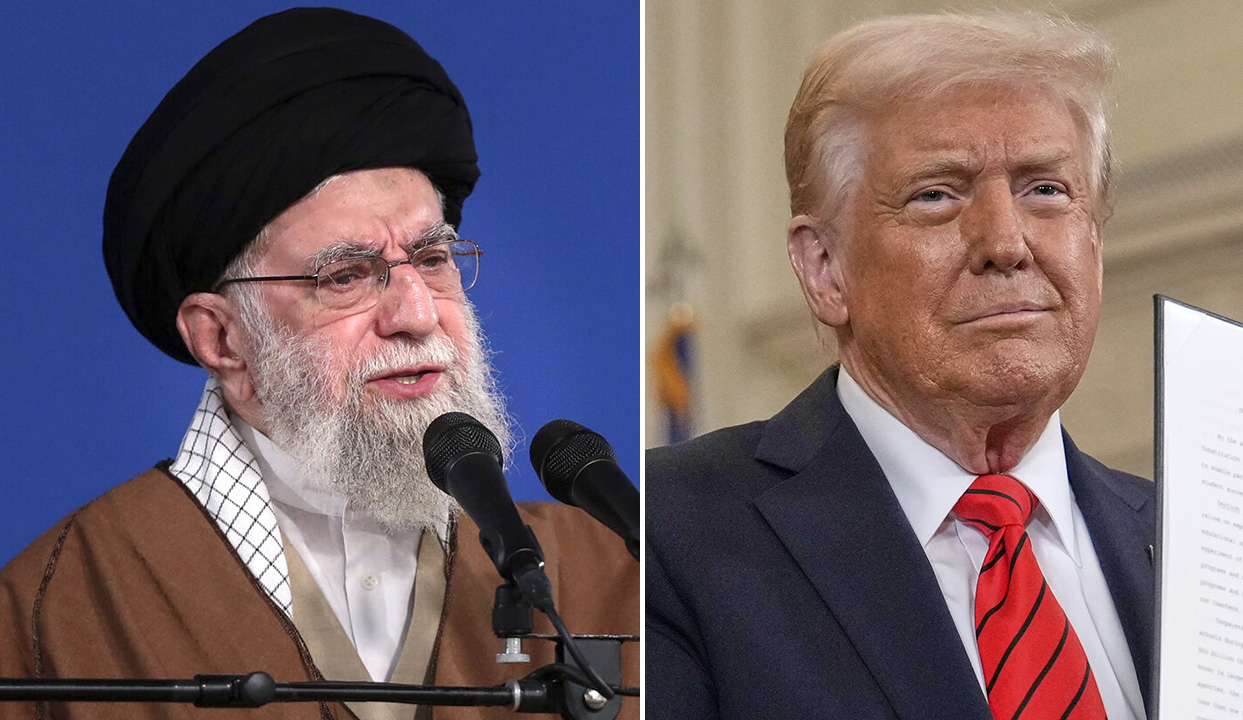
Mohammad Bagher Ghalibaf doesn't mince words when it comes to the latest threats coming out of Washington. The Iranian Parliament Speaker just issued a blistering response to Donald Trump’s "Tuesday threat," and he isn't just complaining about rhetoric. He’s warning that these moves are actively pushing the United States toward a catastrophe he describes as a "living hell." It’s a massive escalation in a war of words that has been simmering for years, but this feels different. The tone in Tehran is shifting from guarded skepticism to an aggressive, almost prophetic warning about the stability of the entire region.
You’ve likely seen the headlines about Trump’s recent social media posts and rally speeches where he’s hinted at "big things" happening on a Tuesday. While the American media cycles through theories about what that means for domestic politics, the Iranian leadership sees it as a direct signal of impending military or economic aggression. Ghalibaf’s reaction suggests that Iran is no longer content to play defense. They’re framing the U.S. as a reckless actor led by a "disruptive force" that doesn't understand the fire it's playing with.
The Tuesday Threat and Why It Matters
When Trump makes vague, ominous statements about specific days, it usually triggers a frenzy. But for the Iranian government, these aren't just campaign trail antics. They see them as psychological warfare. Ghalibaf specifically targeted the idea that the U.S. can just dictate terms through social media threats. He’s arguing that this "Tuesday threat" reflects a deeper instability in American foreign policy. It’s erratic. It’s unpredictable. And from his perspective, it’s dangerous for everyone involved.
The core of Ghalibaf's argument is that the U.S. is overplaying its hand. He claims that every "reckless move" made by the Trump administration—or any future one following that playbook—doesn't actually project strength. Instead, it creates a vacuum of chaos. He’s telling his colleagues in the Majlis that the U.S. is essentially digging its own grave in the Middle East. It’s a bold claim. It’s also one that resonates with a lot of people in the region who are tired of being pawns in D.C.’s political games.
A Living Hell for the United States
What does Ghalibaf actually mean by a "living hell"? He isn't just talking about a literal battlefield, though that’s certainly part of the subtext. He’s talking about a total collapse of influence, a bogged-down military, and an economy drained by endless cycles of tension. Iran has spent decades learning how to survive under pressure. They’ve built a network of proxies and economic workarounds that make them a very difficult target to pin down.
Ghalibaf’s point is that the U.S. doesn't have the stomach or the resources for the kind of long-term conflict these threats imply. If you look at the historical context, he’s right about the "quagmire" effect. From Iraq to Afghanistan, the "living hell" of the Middle East has a way of swallowing up American trillions and political capital. By framing the current situation this way, Ghalibaf is trying to flip the script. He wants the world to see the U.S. as the victim of its own arrogance.
The Internal Iranian Perspective
Inside the Iranian Parliament, this rhetoric serves a dual purpose. First, it’s a show of unity. Ghalibaf is a former IRGC commander. He knows the military side of the house as well as anyone. When he speaks, he’s speaking for the hardliners and the security establishment. He’s telling the Iranian public that the government won't be bullied.
Second, it’s a message to the "Gray Zone"—those countries sitting on the fence. By painting the U.S. as a reckless entity dragging the world into a "living hell," Iran is trying to peel away international support for U.S. sanctions. They’re saying, "Look at this guy. Do you really want to follow him into the fire?" It’s a calculated move. It’s about more than just one speech.
Breaking Down the Reckless Moves
What exactly are these "reckless moves" Ghalibaf is talking about? It isn't just the tweets. It’s the entire architecture of "Maximum Pressure."
- Exit from the JCPOA: This remains the original sin in Tehran’s eyes. They see the withdrawal from the nuclear deal as the ultimate proof that the U.S. isn't a reliable partner.
- Assassinations and Sabotage: From Soleimani to nuclear scientists, the history of the last few years is written in blood. Ghalibaf is tapping into that collective memory.
- Economic Sanctions: He views these as a form of "blind terrorism" that hurts ordinary people more than the government.
Ghalibaf is betting that the American public is too exhausted to care about another conflict, while the Iranian state is more than ready to hold its ground. He’s counting on the internal divisions in the U.S. to do half the work for him. When Trump threatens a "Tuesday" showdown, Ghalibaf uses it as a mirror to show the world what he calls "American decline."
Why the World Should Listen
You might think this is just more typical Middle Eastern rhetoric. But Ghalibaf is a pragmatic hardliner. He isn't a firebrand like some of his predecessors. If he’s using this kind of language, it means the internal consensus in Tehran has shifted toward a more confrontational stance. They aren't waiting for the next U.S. election to decide their path. They’re setting the terms now.
The "living hell" warning is also a nod to the "Axis of Resistance." Iran’s allies in Lebanon, Yemen, and Iraq are listening to these speeches. They see Ghalibaf’s words as a green light to continue their own operations. If the U.S. moves, they move. That’s the reality of the regional "hell" Ghalibaf is describing. It’s a multi-front, asymmetric disaster that no amount of carrier groups can easily solve.
The Reality of American Interests
Is Ghalibaf right? Is the U.S. actually being dragged into a disaster? It depends on who you ask in Washington. But the Speaker's words highlight a massive disconnect. While the U.S. focuses on the "Tuesday threat" as a domestic political moment, the rest of the world sees it as a geopolitical earthquake. Ghalibaf is essentially saying that the U.S. is its own worst enemy.
He’s pointing out that you can’t run a global superpower based on "threats of the week." It’s a critique of the "reality show" style of diplomacy that has characterized much of the recent U.S. approach to Iran. For Ghalibaf, the "hell" is the loss of credibility and the inevitable backlash that comes from treating international relations like a campaign rally.
What Happens if the Threats Continue
If the "Tuesday threat" turns into actual policy, expect a rapid response. Iran has already shown it’s willing to ramp up its enrichment levels and expand its regional footprint. They’ve survived the worst of the sanctions. They’ve built deep ties with Russia and China. Ghalibaf is signaling that Iran has options. They aren't the isolated nation they were twenty years ago.
The U.S. needs to realize that these aren't just words. They’re a blueprint for resistance. Ghalibaf is laying the groundwork for a long-term standoff that he believes Iran will win. He’s gambling that the "living hell" will eventually force the U.S. to retreat from the region entirely. It’s a high-stakes game. And right now, the Speaker of the Parliament is holding his cards very close to his chest.
Stop looking at these statements as mere "slams" or "clapbacks." They’re strategic indicators. When a leader like Ghalibaf talks about a "living hell," he’s telling you exactly what the Iranian military is preparing for. He’s telling you that the era of one-sided American pressure is over. If the U.S. keeps pushing, it won't just be Iran that feels the heat. The entire global order will be sitting in the blast zone.
Keep a close eye on the rhetoric coming out of the Majlis over the next few weeks. If Ghalibaf continues this line of attack, it’s a sign that the diplomatic doors are closing. The "Tuesday threat" might have started as a political slogan in the U.S., but in Tehran, it’s being treated as a declaration of war. You can't ignore a warning this direct and expect things to stay quiet. The "living hell" isn't a metaphor anymore; it's a policy warning.