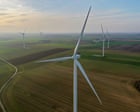
Europe is currently smashing its own records for renewable energy production, yet the air in many cities remains thick with the scent of burning gas and diesel. It’s a frustrating paradox. We’re building wind farms and installing solar panels at a pace that was once considered impossible, but the transition is hitting a brick wall. That wall isn't made of lack of sunlight or wind. It's built from the millions of boilers, engines, and industrial furnaces that we simply refuse to throw away.
The numbers look great on paper. In 2024 and 2025, wind and solar combined to provide a massive chunk of the continent's electricity. According to data from Ember, renewables are finally outperforming fossil fuels in the power sector. But electricity is only one piece of the puzzle. If you look at the total energy used for heating homes and moving trucks, the picture gets much darker. We are essentially pouring clean water into a leaky bucket.
The problem with our obsession with the grid
Most people think the climate battle is won or lost on the power grid. It isn't. While we’ve been busy de-carbonizing the way we make electrons, we’ve ignored the machines that consume them—or rather, the machines that don't.
Think about the average European home. Even in progressive hubs, a huge majority of households still rely on gas boilers for heat. These machines are designed to last 15 to 20 years. Every time a landlord or homeowner installs a new gas boiler today, they’re locking in carbon emissions until 2040. It doesn't matter if the grid is 100% renewable if your house doesn't even use electricity to stay warm.
We're seeing a similar bottleneck in transport. EV sales are growing, but the secondary market for internal combustion engines is still humming along. We’re adding green energy to the top of the system while the bottom remains tethered to old-school combustion. This "replacement lag" is the silent killer of Europe's climate ambitions.
Why clean power isn't enough on its own
It's tempting to celebrate when a country like Spain or Denmark hits a 70% renewable milestone. You should celebrate. It's an incredible engineering feat. But that percentage only tracks the "generation" side of the equation.
The real issue is "stock turnover." Economists use this term to describe how long it takes for old technology to be replaced by new stuff. In the energy world, stock turnover is painfully slow.
- A coal plant might stay open for 40 years.
- A heavy-duty freight truck stays on the road for 12 years.
- An industrial kiln can operate for decades without an upgrade.
Until we have a plan to forcibly retire these fuel-burning machines, the "staggering" gains in wind and solar will just be an expensive layer of green paint on a fossil fuel structure. We're effectively running a dual system. We have a growing, shiny green energy system and a stubborn, aging fossil fuel system running in parallel. That's not a transition. That's just addition.
The political cowardice behind the machine lag
Politicians love cutting ribbons on wind farms. It makes for a great photo op. What they hate is telling a voter they can't buy a cheap gas heater anymore or that their diesel van will be banned from the city center.
This is where the strategy falls apart. The European Green Deal set ambitious targets, but the "Fit for 55" package has faced massive pushback. You’ve seen the tractor protests in Brussels and Paris. You’ve heard the complaints about "green inflation." This pushback has led to a softening of rules around the phase-out of combustion engines and residential boilers.
When governments blink, the market reacts. If people think they can keep burning fuel for another decade, they won't invest in the electrical infrastructure needed to switch. This creates a vicious cycle. Lower demand for electrical upgrades means higher costs for those who do switch, which makes the transition look even less attractive to the average person.
Heavy industry is the final boss
If you think swapping a car is hard, try swapping a steel mill. Heavy industry—steel, cement, chemicals—requires intense heat that solar panels can't easily provide through traditional means. While green hydrogen and carbon capture are touted as solutions, they’re still mostly in the pilot phase.
The International Energy Agency (IEA) has been clear. To hit net zero, we need to stop investing in new fossil fuel supply immediately. But we also need to stop building things that need fossil fuels. Europe is currently caught in a loop where it buys record amounts of Chinese-made solar panels but continues to permit new gas-fired peak power plants "just in case."
This "just in case" mentality is expensive. We’re paying for two infrastructures simultaneously. One is the future; the other is a ghost of the past that we can't seem to shake.
What actually needs to happen now
Stop focusing purely on the "clean energy" side of the ledger. It's a distraction. We need to focus on the "dirty energy" side.
If you're looking for a way to actually track progress, don't look at how many wind turbines were built this year. Look at how many gas connections were severed. Look at the scrappage rates for old diesel engines. That's the real metric of success.
Governments need to stop subsidizing the purchase of "efficient" gas boilers. There's no such thing as a climate-friendly machine that burns stuff. It’s a binary choice now. You either plug it into the grid, or you’re part of the problem.
For the individual, the most impactful move isn't just buying green power from your utility. It's ensuring that the next time a major appliance breaks, you replace it with an electric version. Switch to a heat pump. Get an induction stove. Buy the EV. If we don't change the machines in our basements and garages, all those wind farms in the North Sea are just spinning their wheels.
Start by auditing your own "combustion footprint." Look at every device in your life that requires a flame or an exhaust pipe. That list is your personal roadmap for the next five years. Don't wait for the machine to die before you research the electric replacement. By then, it’s usually too late, and you’ll end up buying another fossil-burner out of convenience. Plan the swap now.