The Bone-Deep Need to Climb
A small, silver-haired man named Elias sits in a nursing home in Ohio, staring at a grainy photograph from 1969. He isn't looking at the Eagle lander or the American flag. He is looking at the blackness behind the moon. To him, that void isn't empty space. It is a presence. It is the silent, infinite cathedral where he once felt, for a fleeting moment, that humanity finally touched the hem of the divine.
We like to talk about the moon in terms of minerals. We talk about Helium-3, water ice in the shadowed craters of the lunar south pole, and the strategic high ground of the Cis-lunar economy. We treat the moon like a giant warehouse of "stuff" that will fuel our next industrial revolution. But if you listen to the way people speak when the cameras are off—when the engineers and the dreamers drop the jargon of "delta-v" and "specific impulse"—you realize something else entirely is happening.
We aren't going back to the moon for the rocks. We are going back because we are starving for a miracle.
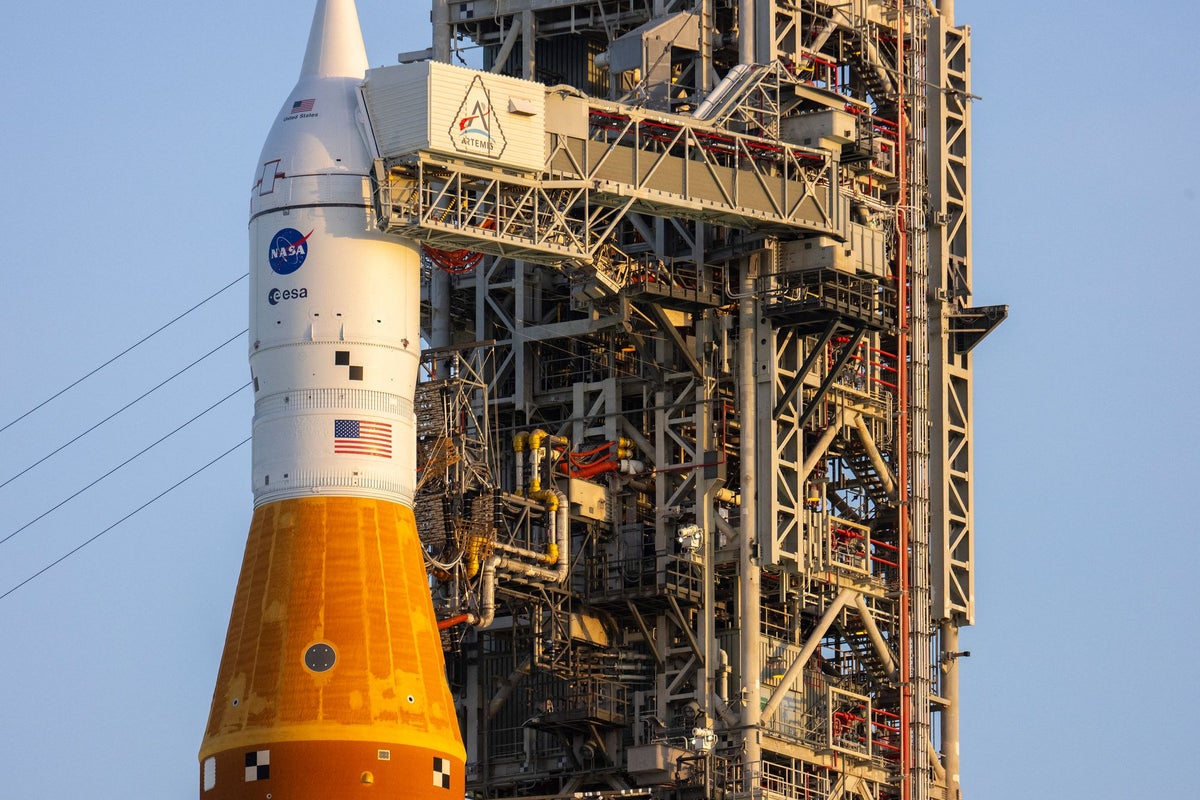
The Artemis program is not just a series of launches. It is a pilgrimage. For the first time in over half a century, we are preparing to put human footprints in the lunar dust again, but the context has shifted. In the sixties, it was a race to prove whose system could scream the loudest. Today, it is a quiet, desperate attempt to find meaning in a world that feels increasingly fragmented and small.
The Sacred Geometry of the Saturn V
Religion, at its core, is a response to the vastness of the unknown. It is the structure we build to keep the dark from swallowing us. When you stand at the base of a rocket like the Space Launch System (SLS) or Starship, the feeling isn't "technological appreciation." It is awe. It is the same neck-straining, breath-catching sensation a peasant felt standing before the spires of Chartres in the 12th century.
Consider the sheer absurdity of the undertaking. We are taking fragile, water-filled biological sacks and hurtling them through a vacuum that wants to boil their blood, just to stand on a dead rock 238,000 miles away. Economically, it is a nightmare. Politically, it is a gamble. Yet, we do it anyway.
Why? Because the moon has always been our primary altar. Long before we had telescopes, we had myths. We mapped our harvests by its phases. We tied our tides and our biology to its cycle. To return there is to return to the source of our first wonder. It is a ritual of homecoming.
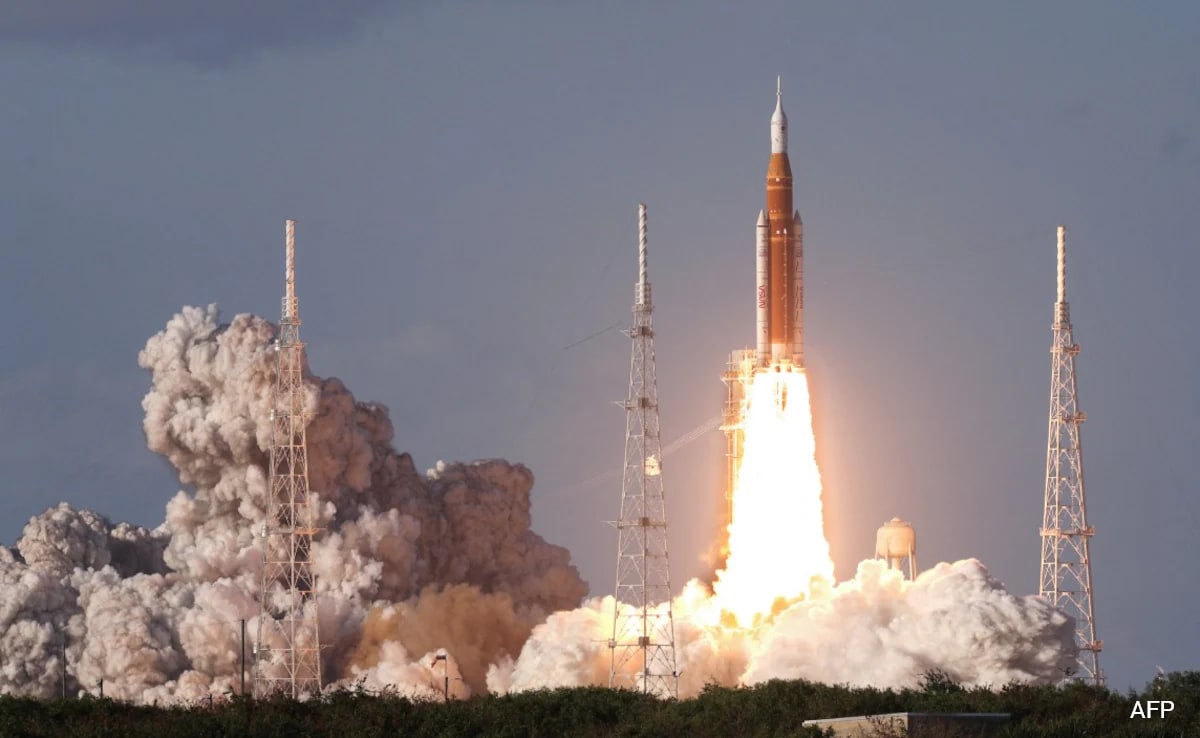
When a rocket ignites, the sound doesn't just hit your ears. It vibrates your marrow. It is a roar that commands silence. In that moment of liftoff, thousands of people—strangers who might disagree on every political or social issue under the sun—hold their breath in unison. That collective holding of the breath is a prayer. It is a moment of shared transcendence that modern life rarely offers anymore.
The Monks of Mission Control
If the moon is the cathedral, then the engineers are the monastics. They live lives of rigid discipline, speaking in a coded language of acronyms and telemetric data. They sacrifice years to the study of a single valve or a specific line of code.
Think of a young software architect working on the Orion capsule. She isn't just "debugging." She is ensuring that the light of consciousness doesn't wink out in the dark. There is a moral weight to this work that transcends a typical paycheck. If she fails, the ritual fails. The sacrifice is rejected.
This is where the "religious" nature of the mission becomes practical. Religious movements survive because they offer a vision of the future that justifies the suffering of the present. Space exploration does the same. It tells us that our current struggles—our climate crises, our wars, our internal bickering—are merely the "labor pains" of a multi-planetary species. It provides a teleology, a sense that we are going somewhere.
Without that "somewhere," we are just a clever species of ape trapped on a warming marble, waiting for the clock to run out. The moon offers an escape from the nihilism of the 21st century.
The South Pole and the Search for Grace
The target this time is the lunar South Pole. It is a place of "eternal light" and "eternal shadow." There are craters there, like Shackleton, whose floors haven't seen a photon of sunlight in billions of years. They are the coldest places in the known solar system, even colder than the surface of Pluto.
Inside those shadows lies ice.
To a scientist, that ice is fuel (hydrogen and oxygen). To the human narrative, that ice is a relic. It is water that may have been delivered by comets at the dawn of the world. By touching it, we are reaching back into our own creation story.
Imagine a hypothetical astronaut—let’s call her Sarah—stepping into one of those permanently shadowed regions. Her headlamp cuts through a darkness that is absolute. When she touches that ice, she isn't just performing a geological survey. She is a priestess at the well. She is retrieving the element that makes life possible from a place where life should not exist.
The stakes are invisible because they are psychological. We need to know that we can still do the impossible. We need to know that there is still a frontier that hasn't been monetized into a boring, predictable algorithm. We need a place where the "rules" of Earthly cynicism don't apply.
The Sin of Staying Put
There is a school of thought that says we should fix everything on Earth before we look upward. It sounds logical. It sounds responsible. But it ignores the fundamental nature of the human spirit. We have never "fixed" everything before moving on. If we had waited for the Stone Age to be perfect, we would still be living in caves with very well-organized rock piles.
Growth is messy. It is expensive. It is, occasionally, terrifying.
But the alternative is a slow, inward-facing decay. When a society stops looking at the horizon, it begins to eat itself. It becomes obsessed with the past because it has no future to speak of. The return to the moon is an act of defiance against that decay. It is a statement that our story isn't over.
We are often told that science and religion are at odds. In the vacuum of space, that distinction evaporates. You cannot look at the Earth from the lunar distance—a tiny, fragile blue thumbprint hanging in an ocean of nothingness—and not feel a sense of "The Sacred."
Astronauts call it the Overview Effect. It is a cognitive shift, a sudden realization that the borders we fight over are invisible and the air we breathe is a thin, miraculous fluke. It is a conversion experience.
The Altar of the Void
The moon is a harsh mistress, as Heinlein said, but she is also a mirror. When we look at her, we see our own reflection. We see our capacity for brilliance and our capacity for folly.
Elias, the man in the nursing home, finally puts the photo down. He remembers the silence of July 1969. He remembers how, for a few hours, the entire planet felt like it was part of one family, waiting for news from a distant relative.
That feeling is what we are buying with our billions of dollars and our years of labor. We aren't buying rocks. We are buying a moment of clarity. We are building a ladder out of the mud so we can look back and see the Earth for what it truly is: a garden that needs tending, viewed from the perspective of the stars.
The rockets will roar. The ice will be harvested. The bases will be built. And through it all, we will be searching for that elusive sense of Grace that we lost somewhere between the last Apollo mission and the birth of the internet.
We are going back to the moon because the Earth is too small for our souls. We are going back because the dark is calling us home, and we have finally remembered the way.
The hatch opens. The dust rises. The silence waits.