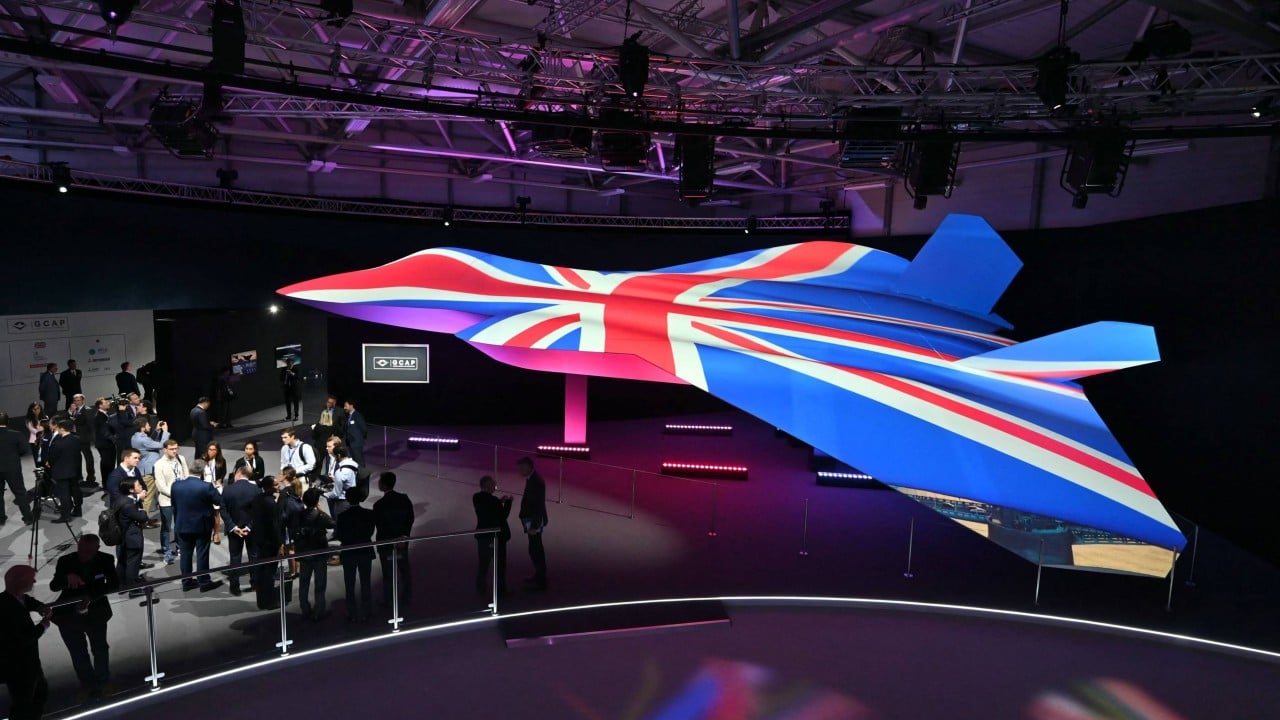
Japan is currently rewriting its entire post-war defense identity through the Global Combat Air Programme (GCAP). This ambitious three-way partnership with the United Kingdom and Italy aims to produce a sixth-generation stealth fighter by 2035, replacing the aging Mitsubishi F-2. While the headlines focus on the primary trio, Canada is quietly positioning itself as the critical secondary gear in this massive industrial machine. Ottawa isn’t just looking for a seat at the table; it is offering the specific specialized infrastructure and flight-testing geography that the core GCAP members desperately lack.
The logic behind a Canadian "tailwind" for the GCAP project rests on two pillars: North American sensor integration and the sheer physical space required to push a hypersonic-capable airframe to its limits. Japan faces an increasingly pressurized security environment in the Indo-Pacific, making local testing of a highly sensitive, next-generation platform difficult to hide from rival electronic intelligence. Canada, conversely, offers the Cold Lake range—a massive, isolated airspace where sensors can be calibrated and flight envelopes expanded without a literal gallery of adversarial observers. Meanwhile, you can explore related stories here: The Anthropic Pentagon Standoff is a PR Stunt for Moral Cowards.
The Cold Lake Advantage
Modern fighter development is no longer about who builds the fastest engine. It is about who manages the electromagnetic spectrum. The GCAP platform is designed to act as a flying data center, coordinating "loyal wingman" drones and processing vast amounts of sensor data in real-time. Testing these capabilities requires immense, radio-quiet ranges.
Japan is a crowded archipelago. The UK and Italy are tucked into the densely packed European continent. None of these nations possess the geographical vacuum necessary to test high-output electronic warfare suites without disrupting civilian infrastructure or inviting Russian or Chinese signals intelligence ships to park just offshore. Canada’s Alberta and Saskatchewan ranges provide a sanctuary for this kind of "black" development. By integrating Canadian testing grounds into the GCAP roadmap, the program gains a secure laboratory that the core members simply cannot replicate at home. To see the complete picture, we recommend the recent article by Ars Technica.
Avoiding the F-35 Trap
Tokyo’s shift toward GCAP was a calculated move to escape total reliance on US defense primes. While Japan remains a massive operator of the F-35, the "black box" nature of American software limits Japan’s ability to modify the aircraft for its specific regional needs. GCAP represents a quest for digital sovereignty.
Canada finds itself in a similar, if slightly more complicated, position. While Ottawa is committed to the F-35 for its immediate fleet renewal, its domestic aerospace industry—the third-largest in terms of GDP contribution globally—needs a future-proof project to sink its teeth into once the F-35 assembly lines stabilize. The GCAP offers a more open architecture than the American counterpart. If Canada joins as a strategic partner, its firms could secure high-level workshare in AI-driven flight controls and advanced materials, areas where Canadian companies like CAE and Héroux-Devtek already hold global weight.
The Industrial Reality of Sixth Generation Flight
The cost of developing a sixth-generation fighter is staggering. Estimates suggest the R&D alone could exceed $40 billion before the first production model even leaves the hangar. Spreading this financial burden is the primary reason the UK, Italy, and Japan merged their separate projects (Tempest and F-X) into GCAP.
Canada brings a unique financial and industrial sweetener to the deal. Unlike some smaller European nations that might offer token contributions, Canada has a proven track record of managing complex aerospace supply chains. More importantly, Canada acts as a bridge to the North American defense market. If GCAP is to be a commercial success through export, it needs to be interoperable with US systems while remaining distinct enough to offer a competitive alternative. Canadian engineers are the world's leading experts at navigating that exact middle ground.
Sensors and Software Sovereignty
One of the most overlooked factors in the GCAP-Canada discussion is the role of sensor fusion. The next generation of air combat will be won by the pilot who sees the enemy first, not necessarily the one who flies the fastest. Japan is pouring billions into "Integrated Sensing and Non-Kinetic Effects" (ISANKE). This system integrates radar, infrared, and electronic warfare into a single, cohesive picture.
Canadian firms specialize in the ruggedization of these sensors and the high-speed data links required to share that information across a fleet. By bringing Canada into the fold, the GCAP consortium gains access to specialized talent that has spent decades refining hardware for the harsh environments of the High North. This isn't just about cold weather testing; it is about the physics of high-altitude operations where the air is thin and the margins for sensor error are non-existent.
The Geopolitical Chessboard
We must look at the map to understand why this partnership is accelerating now. Japan is looking eastward across the Pacific for allies that share its concerns about regional stability but aren't the United States. Canada, under its Indo-Pacific Strategy, is desperate to prove it is a serious security actor in the region.
Supporting GCAP is a low-risk, high-reward move for Ottawa. It allows Canada to diversify its defense ties beyond the "America First" gravitational pull while securing the future of its aerospace sector for the next forty years. For Japan, Canada represents a stable, resource-rich partner with a shared interest in maintaining a rules-based order in the Pacific.
The Engine of Innovation
The propulsion system for the GCAP is expected to be a marvel of thermodynamics. It must generate massive amounts of electricity to power the onboard lasers and high-powered sensors while maintaining a low thermal signature to avoid detection. This requires advanced cooling techniques and new metal alloys.
Canada’s mining and materials science sectors are uniquely positioned to provide the exotic minerals and processing techniques required for these engines. We are talking about a supply chain that starts in the Canadian Shield and ends in a Mitsubishi Heavy Industries assembly plant. This vertical integration is what makes the "Canadian tailwind" more than just a catchy phrase; it is a structural necessity for a program that aims to outpace the rapid advancements seen in Chinese stealth technology.
Challenges to the Partnership
It would be a mistake to assume this is a done deal or a flawless strategy. Canada’s defense procurement history is a graveyard of good intentions and political interference. The "Canadization" of defense projects often leads to delays and spiraling costs as local workshare requirements clash with engineering realities.
Furthermore, the US may not look kindly on a key NORAD partner shifting significant R&D resources toward a platform that competes directly with future American air dominance projects. There is a delicate diplomatic dance required here. Ottawa must convince Washington that its involvement in GCAP strengthens the collective Western technological edge rather than diluting it.
Bridging the Pacific Gap
The technical hurdles of GCAP are immense. We are moving toward a world where the "pilot" may spend more time managing an AI swarm than actually dogfighting. This transition requires a fundamental shift in how we train aviators and how we build the simulators they use.
CAE, headquartered in Montreal, is the undisputed leader in flight simulation. If the GCAP program wants the most realistic training environment possible, they have to go through Canada. This gives Ottawa a massive "chip" at the bargaining table. Japan knows this. The UK knows this. By the time the first GCAP prototype takes flight, Canadian software will likely be the reason the pilot knows how to handle it.
The Strategic Pivot
Japan’s decision to move forward with GCAP was a signal that the era of passive defense is over. By seeking out partners like Canada, Tokyo is building a web of middle-power alliances that can survive shifts in American isolationism. This isn't just a plane; it is a hedge against a volatile future.
Canada’s role in this is to provide the space, the specialized sensors, and the industrial stability that a project of this magnitude requires. It is a symbiotic relationship where Japan gets a secure testing ground and a sophisticated supply chain, while Canada secures a future for its aerospace workers that goes beyond just being a branch-plant for US firms.
The integration of Canadian "tailwinds" into the Japanese project is a recognition that in the 21st century, no nation—not even one as technologically advanced as Japan—can build the future of flight alone. The GCAP is a test of whether middle powers can collaborate to produce something that rivals the output of superpowers. Canada is the missing piece of that puzzle.
The move toward cold-weather testing and North American range integration will likely be the first formal step in a series of bilateral agreements. Watch the upcoming defense procurement cycles in Ottawa; the silence regarding GCAP's secondary partners is about to get very loud. As the F-35 begins its long service life, the eyes of the Canadian defense establishment are already shifting toward the horizon where the Japanese-led project is beginning to take shape. This is the new reality of global defense: fragmented, collaborative, and increasingly reliant on the specialized niches that countries like Canada have spent decades perfecting.