Western media loves a defection story. It fits the script. It feeds the ego of the host nation. It offers a clean, cinematic arc of "escape" that resonates with audiences who want to feel like their borders are the finish line of a marathon toward freedom.
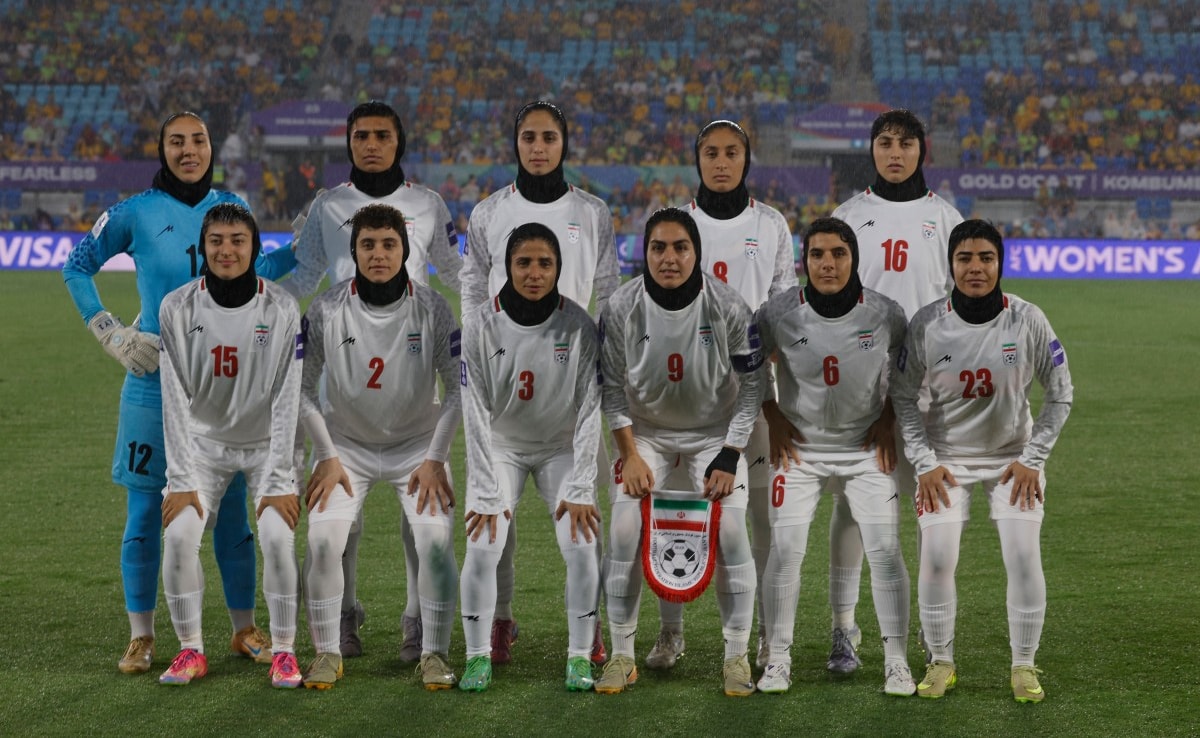
When the Iranian women’s national soccer team prepares to head home after a tournament abroad, the collective sigh from international observers isn't one of relief for their safety. It is a sigh of disappointment. The "will they or won't they" speculation regarding asylum has become a recurring trope that does more damage to the players than the systems they are supposedly fleeing. By framing every international trip as a potential escape attempt, we strip these athletes of their agency, their patriotism, and their professional identity.
We need to stop asking why they didn't leave and start asking why we are so obsessed with them becoming refugees instead of champions.
The Myth of the Easy Exit
The lazy consensus suggests that staying in the West is an objective "win" for any athlete from a restrictive regime. This perspective is rooted in a profound ignorance of what it means to be an elite competitor.
For an Iranian international player, asylum isn't a step up; it is often a professional death sentence. FIFA eligibility rules are a bureaucratic nightmare. Even if a player successfully claims asylum, the transition from a national team starter to a stateless athlete waiting for a passport is a fast track to obscurity. You don't just "join another team." You spend your prime years in legal limbo, losing the match fitness and international exposure that defined your life.
I have seen talented individuals across various industries throw away decades of networking and cultural capital for a "fresh start" that ends in a basement apartment and a job that has nothing to do with their skillset. In the context of women’s soccer, where the financial margins are already razor-thin, the "freedom" of the West often looks like the freedom to be broke and forgotten.
Patriotism is Not a Proxy for Politics
The most offensive assumption in the current discourse is that playing for Iran is an endorsement of every policy within the country.
Western pundits struggle to separate the shirt from the state. For these women, the green, white, and red jersey represents the girls in Tehran, Isfahan, and Tabriz who are playing in dirt lots. It represents a decade of fighting for the right to even have a pitch to play on.
When they decline asylum, they aren't necessarily saying they love the status quo. They are saying they refuse to abandon the very people they are playing for. Leaving might save the individual, but it deserts the movement. The "lazy" take is that staying is an act of submission. The reality is that staying is often the most radical act of defiance possible. You cannot change the culture of a sport in your home country from a training camp in Scandinavia.
The High Cost of the "Defector" Label
Every time an article speculates on the asylum status of these players, it puts a target on their backs.
Think about the mechanics of a return flight to Tehran. If the international press has spent the last week painting the team as a group of potential fugitives, the security apparatus at home feels pressured to "verify" loyalty. The media's hunger for a dramatic escape story creates the very danger it claims to deplore.
We saw this with Kimia Alizadeh. We saw it with Sadaf Khadem. The narrative becomes so loud that it drowns out the actual sport. The players become political footballs long before they ever touch the ball on the pitch. By treating their return as a "choice" to go back to "the dark side," we reinforce a binary that ignores the nuance of family, heritage, and the sheer grit required to exist in a space that others want you to vacate.
The Professionalism We Ignore
While the world focuses on their hijabs and their visa statuses, it misses the tactical evolution of the squad.
Iranian women's soccer has made massive strides in technical proficiency and defensive organization. They are athletes who have mastered the art of performing under a level of scrutiny that would break most Premier League stars. They deal with travel bans, funding shortages, and a global media that only cares about what they wear or where they sleep.
If we actually respected them as professionals, we would talk about their mid-block. We would talk about their transition play. Instead, we treat them like characters in a spy novel. This isn't just patronizing; it's a failure of sports journalism. It’s easier to write a human interest piece about "escaping oppression" than it is to analyze the growth of the women's game in Asia.
The False Promise of Western Inclusion
Let’s be brutally honest about the "warm welcome" the West provides.
Women’s soccer in Europe and North America is self-congratulatory about its inclusivity, yet it remains a system built on specific cultural norms. An Iranian player arriving in a Western league doesn't find a utopia. She finds a different set of prejudices. She finds coaches who don't understand her background, media that wants her to be a spokesperson for "liberation," and a fan base that views her as a curiosity rather than a striker.
The assumption that the West is the only place where a woman can find "fulfillment" is a remnant of a colonial mindset. It ignores the deep-seated connections these women have to their communities. They are daughters, sisters, and mentors. To ask them to sever those ties for the sake of a Western headline is the height of arrogance.
Stop Fixating on the Exit
The obsession with asylum is a distraction from the real work. The goal should be a world where an Iranian player can compete globally and return home without it being a headline-grabbing event.
By framing their return as a "decline of asylum," we suggest that leaving is the default and staying is the anomaly. It should be the other way around. Every athlete should have the right to represent their home without being pressured to become a political symbol for the benefit of a foreign audience.
The Iranian women's team isn't "beginning a journey home" because they missed an opportunity to run away. They are going home because they have a job to do. They are building a legacy in a place where it actually matters.
If you want to support them, stop looking for the exit signs and start looking at the scoreboard. The real story isn't that they stayed. The story is that they are still standing.
The next time you see a headline about an Iranian team returning home, don't pity them. Respect the fact that they have the courage to inhabit the space they were told they shouldn't own. They aren't victims of a system they refused to flee; they are the architects of a future you are too distracted to see.
Shut up about the asylum and watch the game.